Decades of eating a fully raw, unprocessed diet suggest that when we trust our natural instincts, guided by smell and taste instead of habit, the body can achieve with little effort not only a complete freedom from diseases, but a state of health, strength and mental clarity wholly unprcedented. Cooking, and the various forms of dietary alteration since the late Paleolithic may have been responsible for much of what know as the human condition: disease, physical and cognitive limits, psychology. Conversely, the closer our diet returns to that of the great apes, the more of our original nature is restored, in proportion to our effort and discipline.
If cooking was the Biblical Fall, we offer to open to return to the Garden of Eden.
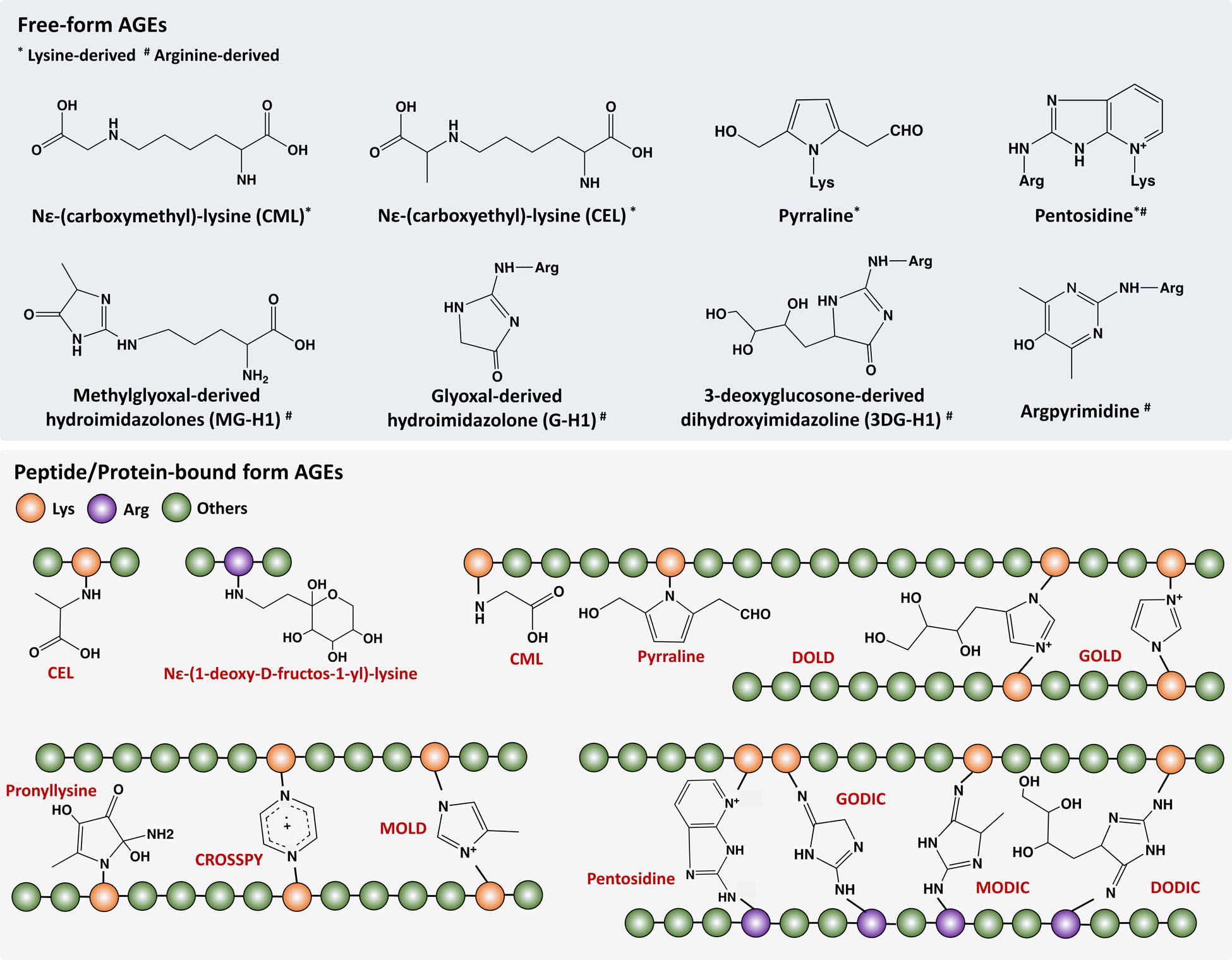
The main reason behind the effects of cooking on health, which we list later, is the concentration of AGEs (and ALE for lipids), classes of very specific molecules, thousands of times more abundant in cooked food and associated with disorders as varied as cancer, diabetes, organ failure, cognitive decline with and without Alzeimer disease, with genetics markedly playing no role.
AGEs are the results of a chaotic blending of sugar chains and proteins and we know of their key role in inflammations (making for a much higher pain sensibility in humans than in wild animals)1, and last but not least the aging process. Except for methylglyoxal10,12,13—a product of normal metabolism—all other AGEs do not exist naturally in our body and must derive from food… that is, processed food.
Dietary AGEs’ impact on different signalling pathways contribute to the onset of organ damage throughout on the body, especially muscles and liver and brain, affecting both metabolic control and global health. Yet means to detecting, quantifying and studying AGEs in live subjects, only emerged recently, and still fall short of the warranted level of precision.
These molecules are produced during cooking at a rate exceeding several thousands times if not more than what is found in nature outside forest fires. Yet despite several findings indicating their major role in health, the issue has been virtually ignored by all authorities everywhere2.
But from a certain threshold of pollution, a bit more or less of it can not decently be expected to predict much. Once cooked, to tell who will die when or how becomes like predicting which tree will fall first in the next hurricane. Sanguine concentration (of AGEs) is mostly of a qualitative indicator and can not be naively used to rank people for the likelihood of diseases, let alone patients for the progression of specific diseases in very limited conditions.
Many use the absence of a convenient linear relationship as the proof of innocuity of a traditional, AGE-rich diet, as in plainly stated in the abstract of their studies.
However these processes are chaotic, paradoxical in nature so expecting a nice relatinship flies in the face of both common sense and biology, which abonds in compensatory mechanisms, beside the various environmental factors plain impossible to control. On the other hand the body innately recognize a subset of all AGEs as normal physiological junk, it does not mean it can deal with or recognize at all all kinds of AGE the same way.
Thus as should be expected the levels of thermal process contaminants in foods does not reflect the exact amount we are exposed inside, because of both elimination processes and secondary reactions, the latter which might leave even more insidious or harmful byproducts. Heat process products build up in tissues and cause telomere attrition, which is to say accelerate ageing on a genetic level, through diabetes or on its own. AGEs accumulate in organs, but that the rate of build-up depends on the particular molecular species.
Predictably, AGEs bound to proteins, compared to free ones (with only a lysin moiety attached) are much more difficult to process and eliminate by our kidneys or intestinal bacteria leading to various chronic diseases, and so the rate of accumulation in our cells is much higher. Foods rich in protein and fat seem to have a higher content of CML and Methylglyoxal; in contrast, bread crust has lower content of these two AGEs. This echoes the fact that the danger of cooked meat far exceeds that of merely heated sugars which look a lot more like what the body is used to and can handle.
The blood-brain barrier is no more impermeable than the intestinal barrier. Both are merely custom checks points. So even though the brain makes use of dedicated systems (microglia, astrocytes, dendrocytes, perivascular macrophages and as we think, the misfolded proteins aggregates) it also use the standard immune system, in the form of tissue-resident T cells. Most if not all organs, have their own tissue-resident immune cells, maybe acting as liaison with the rest of the body with all things regeneration and immunity-related.
The term “oxidative stress,” frequent in the literature, is both improper and reductive. The phenomenon goes well beyond free radicals and oxidizing species: heat-altered molecules damage cells in the very process of being metabolized, with free radicals as consequence, not cause. Abnormal molecules do their worst damage in structural roles (bad fats and proteins), causing ingrown nails, loss of skin tone and elasticity, severe skin aging, and partly varicose veins through smooth muscle deterioration. They also make us fat regardless of caloric intake. ROS themselves are short-lived and do not accumulate — but abnormal structural compounds do, steadily raising the background level of ROS and thus mutations, until cellular turnover outpaces repair and stem cell reserves, ending in tumors or necrosis.
Skeptics point to the inverse correlation between weight and blood AGE concentration as evidence of innocuity — but the correlation with fat levels and atherosclerosis tells the opposite story.
This creates two distinct kinds of fat: healthy fat, easy to mobilize for energy, and denatured fat sequestering AGEs. Forcing the body to draw on the latter — through prolonged fasting or severe caloric restriction — releases those molecules back into circulation, with serious consequences. It disturbs nervous system function and muscular integrity, from localized myoclonies to life-threatening cardiac arrhythmias, by disrupting mitochondrial energy metabolism directly.
Meanwhile kidneys tire from filtering the excess, and fat people cannot avoid the resulting oxidative stress and microinflammation regardless. The body moreover stores its most dangerous molecules deepest, so forcing exercise risks releasing what it had most reason to contain — opening vaults of poisons faster than they can be handled. Evolution simply did not anticipate the volume and novelty of molecules cooking introduces, which explains the staggering frequency of cardiac arrests in professional athletes.
This also applies to excessive fasting. Which raises the question: do the fat levels mainstream medicine considers critically low (<6% BMI for males), versus near 0% in all wild primates, reflect genuine human biological differences — or the consequences of releasing acutely toxic molecules too quickly, and in the absence of replacement material to fill the holes left in cells?
The answer to discover our original food range, is to observe primates:
They feed only on natural food, neither mixed nor processed or seasoned
They are guided mainly by smell and only then by sight, color or memory.
Under optimal conditions the following pattern invariably applies:
attractive smell → salivation reflex = physiological need → luminous phase, an excellence in taste confirming the smell.
Saturation of need is indicated by an unpleasant sensation in the mouth: acidic, bitter, raspy, difficult swallowing etc, meaning that enzymes are missing.
Forcing us to stop eating, as continuing regardless causes a painful sensation in the stomach, if not immediately the mouth.
Some food have a stronger character than others for instance pineapple (that contain a protease) will make you bleed from the moment your body stops producing anti-proteases. This doesn’t mean pineapples are inherently better though, all wild food can become unimaginably repulsive to the point of throwing up.
The wideness of tastes they can take depending on your inner state, is a crucial characteristic of wild food compared to domesticated or selected species, let alone cooked food—which can’t be as rich in taste nor as harrowingly distasteful when the body refuses it. It ressembles a true dialog in the primeval common language of chemistry, and maybe more, resulting in a pleasure more intense than anything artificial.
(Wild) animals do not have our intellect, they spontaneously obey their senses to regulate the quantities. Too dumb to disobey nature. Influenced neither by dietetics nor the fear of missing, a good smell is followed by a good taste, they continue to eat, stop at the first sensation less pleasurable.
Precise menu content:
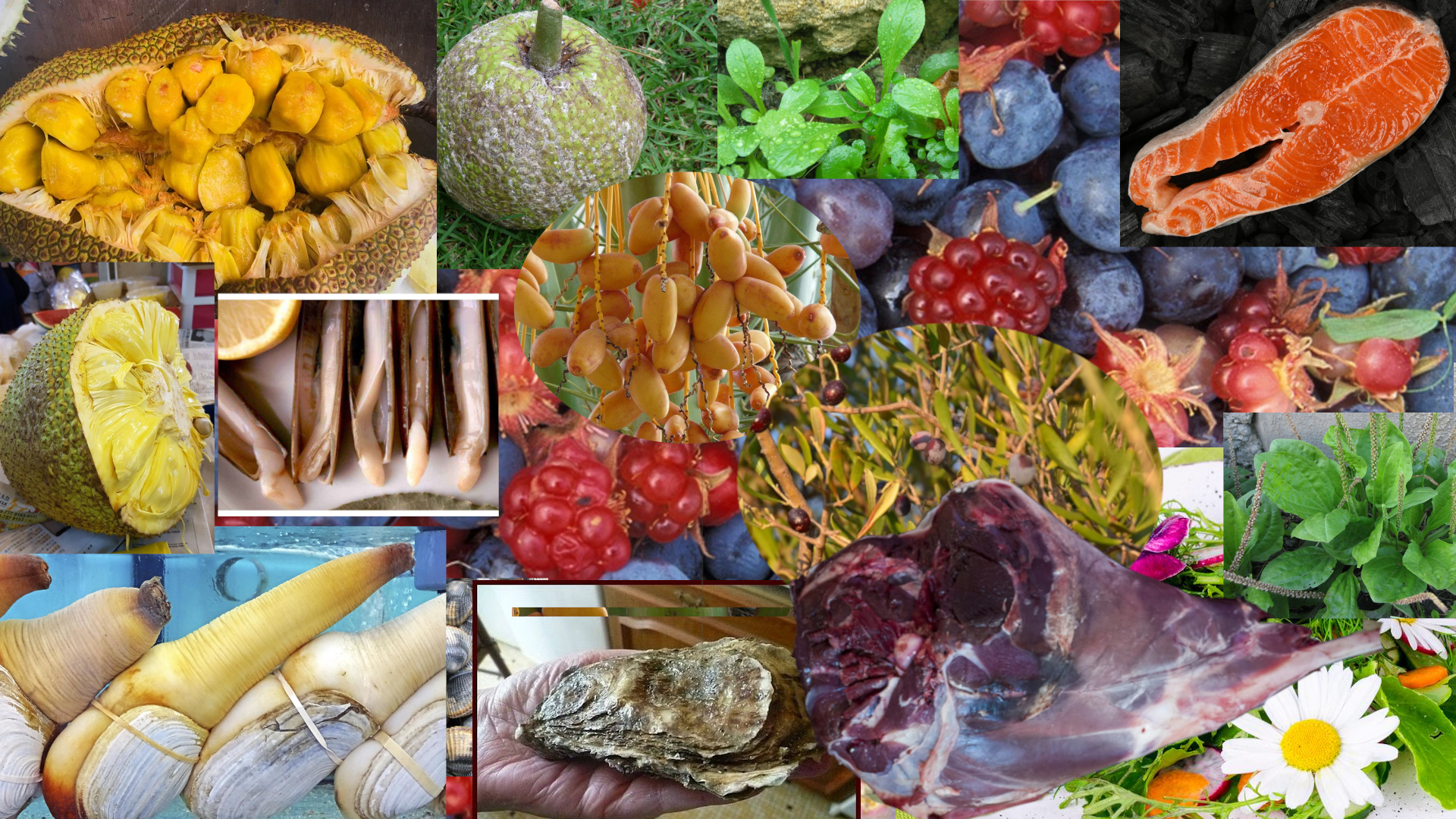
Fruits (pulp + seeds) > 50 % weight
Other plant foods: stem pith, leaves, petioles, seeds, flowers
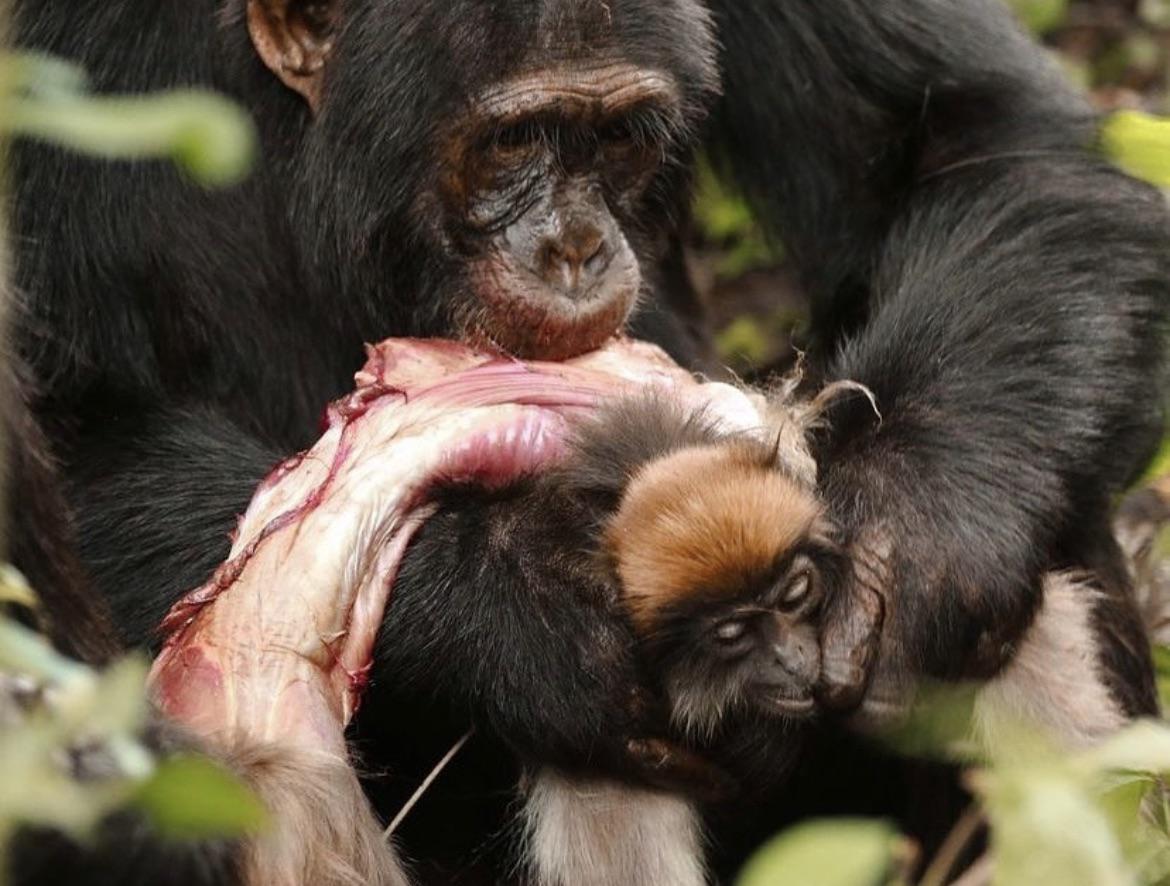
Sometimes small mammals, up to young antelopes. Or smaller monkeys.
Honey, eggs, soil
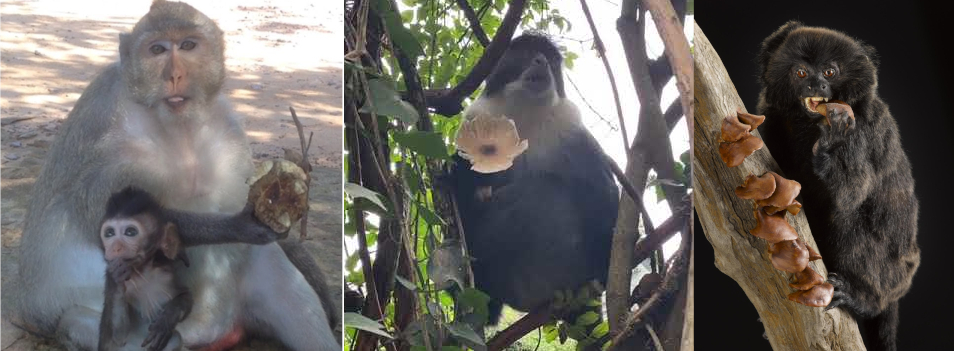
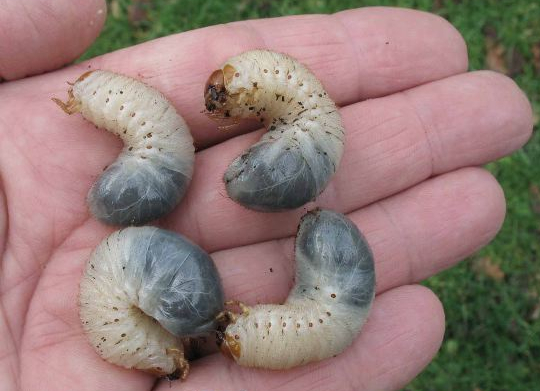
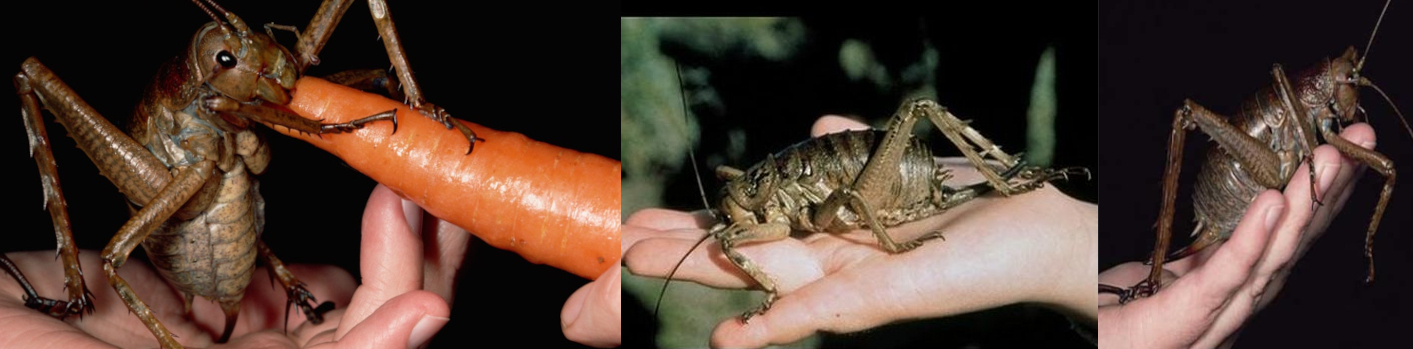
Mushroom and termites, insect larvae
Monkeys (like bears and many omnivorous animals), happen to be very opportunistic. They show clear preferences but the most seems to have varied food in 4 categories: carbohydrates (fruits, honey), vegetables (greeneries !), animal proteins, vegetable proteins. Depending on local availability, it is possible to rely on honey or a small variety of fruits… for a limited time.
Bonobos
Bwindi Mountain Gorilla
Ngogo Eastern Chimpanzees
Rio Muni Central chimpanzees
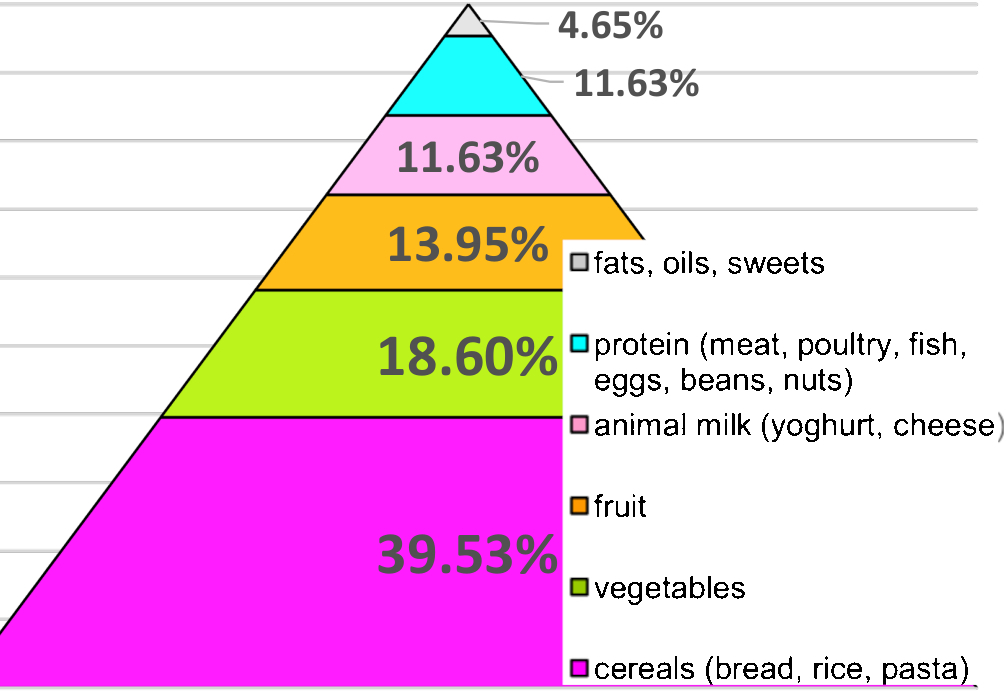
Modern humans, USDA, 1992
No primate eating more than 5% of animal products overall. Even wild snow monkeys spend a large part of their day foraging, mostly fruits, but depending on what is available plants, small animals, insects, farm crops, and even soil, and a lot of bark in winter. With their intelligence, prehistoric men would have a much easier time finding the above which they prefered, while meat (a fortiori raw mammal meat which is the least appealing of all) is only ever a stop-gap measure for apes.
In practice, proteins constitute roughly 15-20% of intake by weight. Among long-term practitioners, insects consistently emerge as the most prized protein source — preferred over meat, eggs and fish alike.
Crustaceans and bivalves are phylogenetically close to insects and distant from us, and easy to digest, while mammalian meat shares molecular structures with our own tissues, with the autoimmune risks it involves in excess. Even for long-term practitioners, wild meat stops you rather quickly. Meat, cooked meat especially, has been perceived as dangerous all thoughout history3. Not to mention the ecological damage of hunting and farming and ethical problems of this industry. Observations indicate monkeys have a clear preference for eggs and invertebrates, followed by reptiles and birds.
Walk through a virgin forest like the Białowieża in Poland and see the ground littered with dead trunks swarming with larvae and insects — in a climate supposedly inhospitable for a naked primate. In a true rainforest, without human deforestation, insects proliferate and were almost certainly a dietary staple throughout our evolution as it still throughout East-Asia, hence their current neglect in Western diets stems from culture, not biology.
Total deprivation of animal proteins (which does not mean meat) causes deficiencies, as vegans invariably realize. But primates are not carnivores: neither our dentition nor our digestive system is built for fresh raw meat4.
Primates are occasional opportunistic meat eaters — and it makes sense that we evolved to consume bodies already dead and rotting in a hot humid climate, their decomposition producing the strong attractive scent that signals readiness.
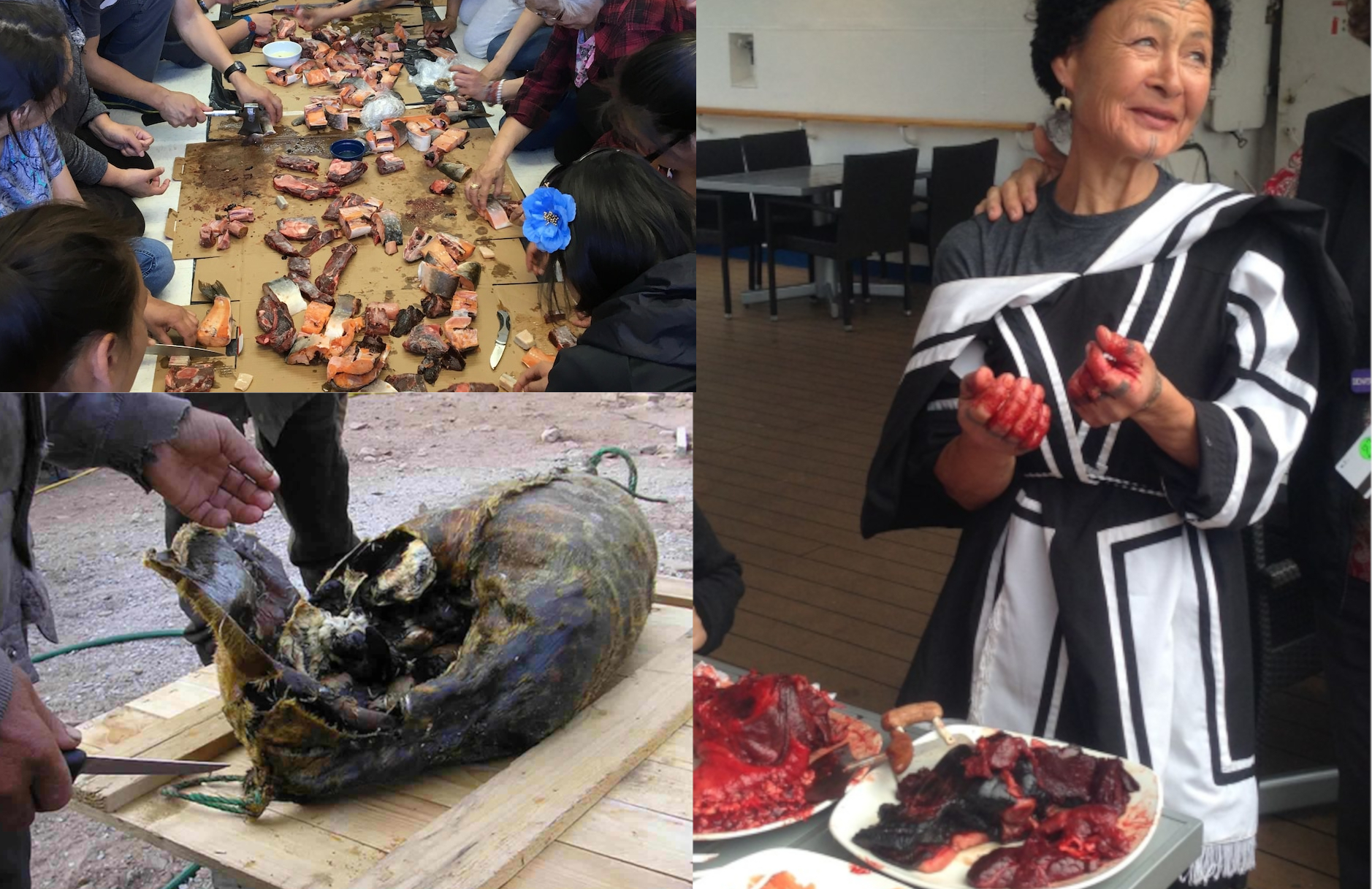
All populations eating raw meat traditionally, the Inuits, but no one better than the Romans typify this. They did not merely tolerate rot but hunted it down and served it at the finest tables in the empire. Garum, their most ubiquitous condiment, was deliberately engineered decomposition: fish guts packed into stone vats and left baking in the sun for months until bacteria had reduced the flesh to a pungent liquid poured over virtually everything they ate.5 The leftover solid paste, allec6, was sold to the poor, ensuring that even the destitute ate concentrated putrefaction daily. Game was hung well past modern safety thresholds, oysters eaten alive and unheated, and cured meats consumed uncooked without a second thought — salt and time considered guarantee enough. The Romans did not see the bacteria and fungi of decomposition as enemies to be killed with fire. They were connoisseurs of rot, and did not die of it.
The maturation or ripening usually is done by storing game in a cool place for a variable period of time, 8 days or more, in order to tenderize its flesh and obtain a particular flavor as germs in the intestine invade the tissues and break down the proteins. Mushrooms are also involved in the practice of “dry curing”, where they form a kind of hard green crust on the outside of the piece of meat, that help the enzymes and add flavor.
We no longer age meat to the point of “altering the scent” as Montagne and Brillat-Savarin advocated7. This would be nearly impossible today — Westerners live in such microbiological asepsis that even eating in developing countries triggers “turista”, an explosive intestinal reaction requiring days of adaptation8.
Catching small game presents no particular difficulty either: Victor de l’Aveyron, found wild at age 12 in 1785, naked and non-verbal, was insensitive to heat and cold, could spring like a gazelle and catch birds mid-flight bare-handed, then immediately pluck them.
But the opposite extreme — claiming we suffered the competition for fruits from other animals that would have pushed us in the Savannah to hunt big games — is just as nonsensical. Our morphology has shifted toward terrestrial locomotion over three million years, yes, but this says nothing about how capable original humans were in the canopy. Wild children consistently climb trees to escape danger, and quickly too despite our loss of opposable toes. Suggesting the capacity still exists indeed, when not suppressed by conditioning.
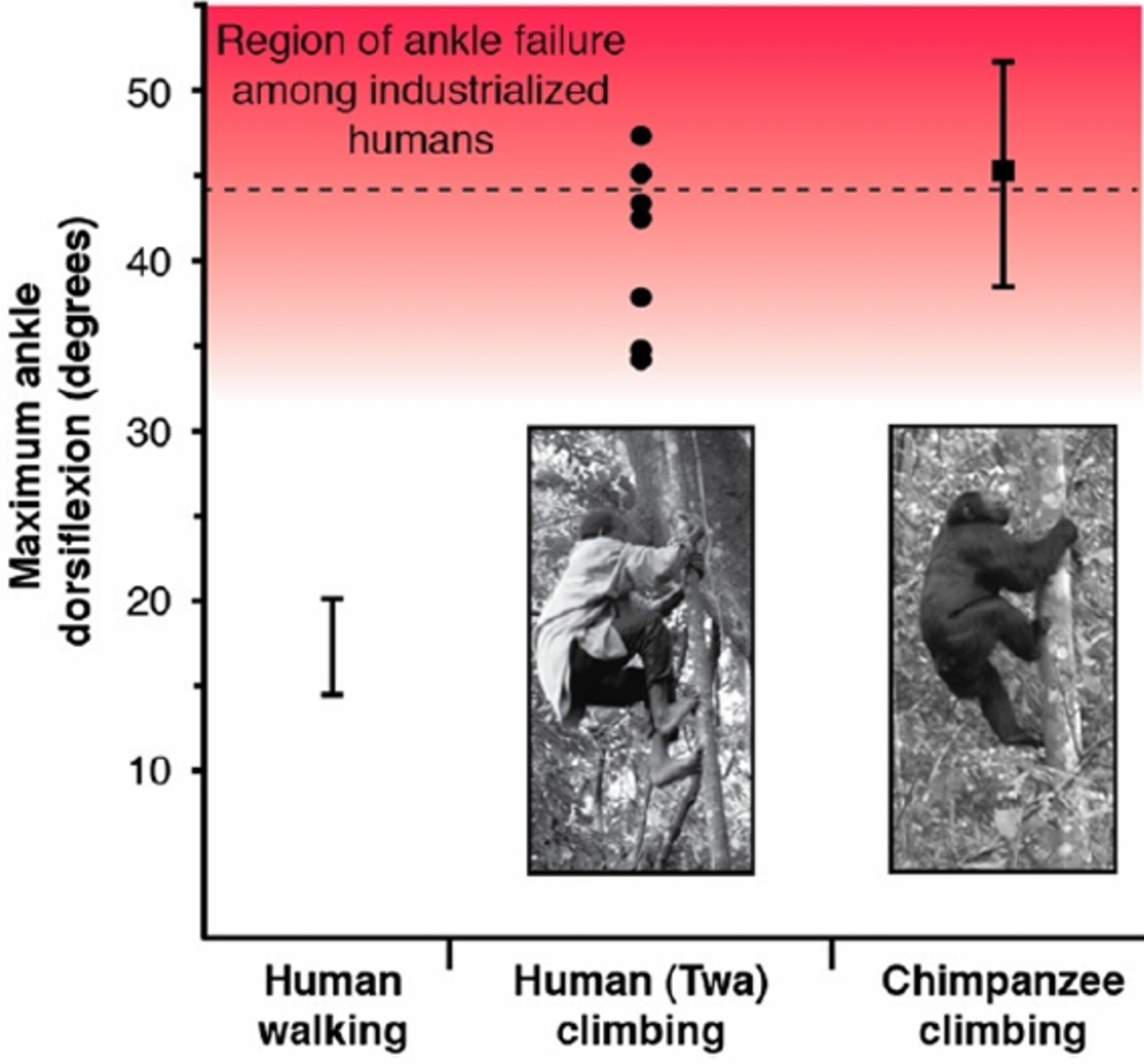
The human ankle is often cited as a fundamental barrier to tree climbing — yet Twa people climb trees 20-50 meters high with no skeletal difference from non-climbing populations, developing longer calf muscle fibers and ankle flexion up to 45° against the normal 15-20°, through conditioning alone9.
This means paleolithic humans were excellent at climbing and navigating trees by brachiation, and so could you, well enough to fetch your dinner. We never quit the trees entirely.
Behold Original beauty
We remain adapted to ripe fruit without question. The apparent scarcity of wild fruit in European forests is not natural — it reflects tens of thousands of years of neglect since we stopped living in and maintaining them. When we abandoned that symbiosis, primate forests stopped being primate forests: within millennia, fruit trees without dissemination degenerate or disappear. The process was completed when we eliminated bears, the only other fully omnivorous animal with a comparable metabolism and the capacity to maintain forests to our liking. The Kazakh forests, still inhabited by bears with tastes remarkably similar to ours, show what abundance looks like when the ecological relationship remains intact. Birds that now raid agricultural crops do so only because we destroyed the diversity of wild fruit around which they evolved.
In practice, instinctonutrition leads to wanting meat only a few times per month, with a preference of fish and reptiles over mammalian meat. Wild raw meat is not poison, but the body simply does not want much of it, which largely dissolves the moral argument vegetarians raise. In the absence of insects and fish the body can default to meat for extended periods, but sustained high intake systematically causes trouble, including tumors.
The idea that Ice Ages pushed humans into regular hunting does not hold up. The mammoth steppe, despite its reputation, was extraordinarily productive, supporting massive herbivore biomass that itself testifies to abundant plant food. Pollen records and plant macrofossil evidence show persistent hazel, pine, oak and other nut-bearing trees throughout the glacial maximum in sheltered valleys, south-facing slopes and river corridors. Stone pine persisted across southern Europe throughout, and abundant freshwater resources (fish, waterfowl, eggs, amphibians), highly accessible to mobile intelligent primates, required no cooking. The assumption that meat and fire were the only viable strategies is not derived from ecological evidence, but assumed then read back into it.
The development of hunting as a primary strategy is better explained by addiction to cooked meat than by any genuine absence of plant food: hunting populations lose both the ability and desire to eat plant-based food regardless of season and energetic rationality.
When discussing human olfaction, it is usually assumed that the average person living in an industrial society represents the normal capabilities of our species. But this amounts to nothing more than genetic essentialism.
In many areas we recognize that modern lifestyles produce developmental mismatches. Myopia, obesity, poor physical fitness and disrupted circadian rhythms are not generally viewed as expressions of our biological potential, but as consequences of an environment very different from the one in which our physiology evolved.
The comparison with chimpanzees does not answer this question. Their olfactory system is somewhat larger and contains somewhat more receptor genes than ours, but the differences are modest. There is no evidence that their sensory epithelium is dramatically denser, or that their olfactory organs follow a fundamentally different design. The anatomical gap is nothing like that separating humans from dogs or other mammals with exceptional olfactory abilities. If the peripheral sensory apparatus differs only slightly, then a significant part of the functional difference may lie in development rather than anatomy10.
Naively, one could blame this on the lack of exposure to natural smells brought about by the excessive sanitization of the Pasteurian era over the last two hundred years. However, more traditional or primitive cultures show little improvement in their sense of smell — certainly not enough to track a single fruit ten meters away blindfolded.
We argue that the deficiency of our sense of smell, compared to chimpanzees or any other animal relying on it to survive (which is the overwhelming majority of them), derives not from our genes or mere cultural habits, but from a shared environment so widespread that we fail to consider its influence. A molecular environment, that is: cooking.
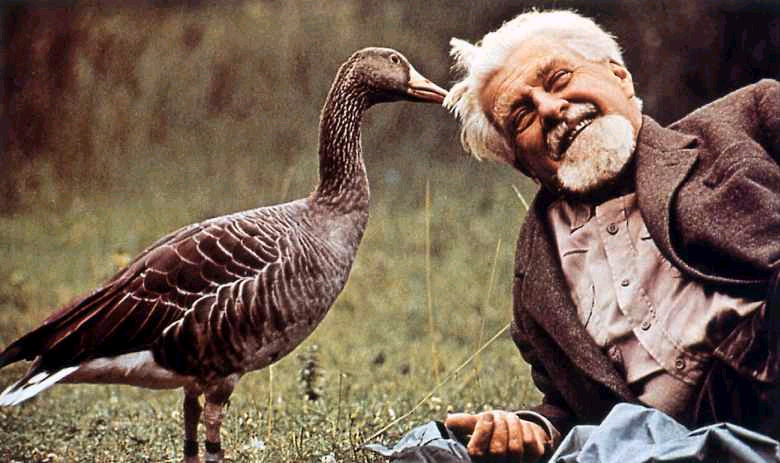
The body needs no dietary theory, it knows its needs to the milligram, if only we listen. Most people deny this possibility simply because they never experienced it, by lack of opportunity. Every instinct requires a concomitant learning process to function correctly, as Konrad Lorenz established: it is innate, yet its correct application must be learned. In some species, even basic behavior requires such a learning process11.
The same is true for feeding: instincts are actualized during the key moments of childhood. A very young baby presented with raw food immediately smells it, then either opens its mouth eagerly or turns away, spitting it out if forced: many parents witness this. Within weeks, most infants show interest in meat, chewing to extract its juice despite having no teeth.
Cooking short-circuits this process. Cooked flavors remain narrow and invariant, whereas the genetic programming of the senses presupposes contact with raw food, whose taste and smell shift dramatically with the body’s changing needs. The command to finish one’s plate, repeated across years, replaces instinct with habit, dietary belief, and permanent metabolic disorder.
As Mr Burger explained, cooking does much more than spoil our digestive system and do its work in its place. It also regularizes food, making its texture, smell, and taste all predictable. Raw foods, by contrast: their smell changes with ripeness, microbial activity, water content, mineral composition, insect damage, soil conditions, and so on. In the cooked context, by comparison, smell becomes nearly useless, regardless of recipe or kind of processing. Agriculture reinforced the same tendency by selecting for uniformity, until modern breeds and preservative agents finished the job, removing almost any taste or odor whatsoever.
Meals are selected for children, and recipes are repeated. Smell plays almost no role in deciding what to eat, because those decisions have already been made. Under such conditions, it is difficult to imagine why the brain would devote any resources at all to refining olfactory perception. Now add the scourge of smoking and constant exhaust exposure, and we get a majority of people getting by with virtually no sense of smell at all.
On the other hand, smell, even for highly visual animals like primates, remains vital in nature: to track food, and not to poison oneself. The brain becomes capable of extracting meaningful information from odors when that information has practical value, and conversely learns to filter it out of perception otherwise. The purpose of smell is not simply to avoid danger, but to continuously guide food selection toward what best satisfies constantly shifting physiological needs. Taken together, these observations suggest that human olfaction may be limited far less by the anatomy of the nose than by the developmental environment of the brain12.
A child raised on raw food learns to read its body, associating pleasure with obedience to instinct and discomfort with its violation. Recovering this acuity as an adult is difficult and requires considerable discipline. External rules about meal frequency, quantity, and satiation signals become necessary crutches for anyone emerging from a cooked background. A child who never lost this acuity needs none of them13.
Modern discussions of olfaction often emphasize that smell is imperfect: some toxins are odorless, while some harmless substances smell unpleasant. But this criticism misses the point: we did not evolve among industrial chemicals, synthetic flavorings, or modern pollutants, substances new not just to our history, but to the history of life itself. Smell is not a laboratory instrument; it evolved as an optimization system to maintain homeostasis through food selection under natural conditions, as demonstrated by the phenomenon of allesthesia.
A near-perfect system at that, since animals are not known to die from accidentally consuming poisonous food in undisturbed natural environments14. And much of it can be restored through training: many people who adopt instinctive diets report profound changes in olfactory perception, in both breadth and precision alike, wherever they happen to live.
Fire was never needed to survive yet if cooking caused all the pathologies we describe, why did it start, and how did it become universal? Men have used fire for over a million years, but we argue it was not associated with cooked food until very recently in our species’ history.
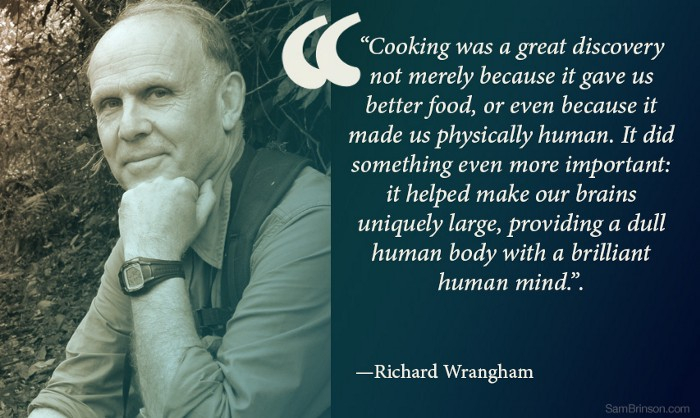
In 1995, Richard Wrangham15 formalized in Catching Fire what paleontologists, anthropologists and the general public had long assumed: that the jaw reduction and brain growth seen in Homo Erectus could not have happened without early mastery of fire and cooked food. Cooking, by outsourcing digestion, would have freed energy for brain development and symbolic activity.
His thesis requires fire mastery nearly two million years ago. The evidence does not support this. Secure hearth evidence in Europe appears no earlier than 250,000 years ago at Valdocarros II, Menez-Dregan and Bolomor Cave16. Wonderwerk Cave in South Africa offers traces of fire use at one million years, but no hearths — the hallmark of controlled, repeated use. Between those dates we see an absence of evidence across intensively occupied sites, with several (Arago Cave, Pech de l’Azé IV) alternating fire-rich and fire-poor layers across thousands of years of continuous habitation. Fire was clearly neither universal nor necessary. Cooking specifically cannot be demonstrated before Cro-Magnon around 45,000 years ago and even then, the overwhelming failure of specialists to mentally separate fire from cooking has distorted the whole debate.
The mainstream reasons offered for fire use come down to four: cooking meat, deterring predators, lighting, and warmth. None hold up.
Meat, as discussed, becomes palatable through aging, thus not requiring cooking. As for predators: fire does not reliably scare large carnivores. Lions and hyenas are cautious around it, not afraid: you might lose a few toes trusting a campfire at night. Many animals are in fact attracted by the smell, associating it with food scraps. We are not natural prey for any species; neither tigers nor sharks attack humans instinctively unless starving. Numbers and spears deter predators far more reliably than flames. The image of cowering prehistoric men saved from nature’s cruelty only by fire is a modern self-comforting myth.
Lighting needs no fire either. We are not cats — no tapetum lucidum, fewer rods17 — but navigating in the dark only requires seeing a few meters ahead, which moonlight and starlight provided perfectly well before the industrial age. Night vision improves dramatically with training18. Wild children consistently show exceptional eyesight, and apes are actively nocturnal. In caves, charred bones become fluorescent and serve as natural markers.
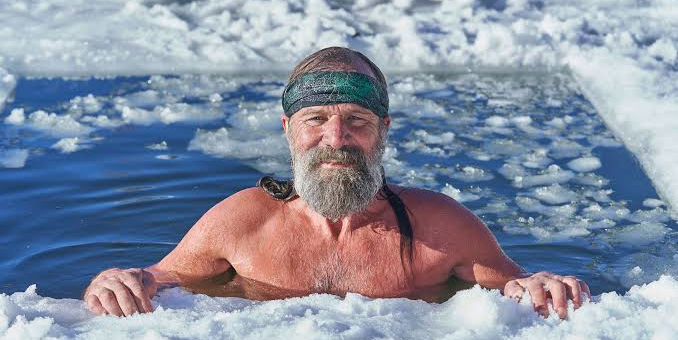
Meet Wim Hof or Iceman
As for warmth: Wim Hof ran a half-marathon at -20°C in shorts, spent 72 minutes submerged in ice, and reached 7,400m on Everest similarly dressed19. Fire was simply unnecessary wherever food grew, which excludes the Arctic anyway. Then animal hides would handle anything nature could throw at them over there in Europe.
One genuine argument for cooking is manioc and other tubers impossible to eat raw, along with most grasses. But their grip on our diet is better explained by the opiates they contain—they drug us, plain and simple, a fact known for decades.
The first attested granaries date to 11,000 BC, though cereal use may be older: grinding stones found in Mozambique suggest possible use 100,000 years ago. Whether this points at dietary use or an early industrial process (grinding for non-food purposes) remains unclear, and in case the practice clearly did not persist.
How cooking started and why and perhaps more importantly, what stages resulted in its eventual global adoption is hard to explain.
The addiction hypothesis is seductive, and had late Mr Burger’s preference: early hominins past a certain brain threshold (say 800cm³) accidentally discover cooked food, found it irresistible as all animals do, and refine it over generations until safer recipes spread the disorder faster than it killed. Then groups with deregulated instincts outbred healthier ones once population growth outpaced disease mortality. But this requires pre-cooking humans to have been cognitively primitive, while the morphology of Paleolithic Eurasians contradicts that entirely.
But… this theory implies rather stupid, impulsive prehistoric humans, almost ape-like in their behavior, which is to say Africans. But given the size of their brain, it seems “archaic” Europeans were rather much, much smarter. So while the addiction and alteration of behavior surely explains a diffusion after cooking gained significant momentum, and why returning to raw food appears impossible, it can not explain why or how it started.
Since cooking, and later the Neolithic Revolution, cerebral disturbances have increased steadily. Cooking induces a neurological feedback loop—like a microphone too close to its speaker—constantly feeding brain centers the product of their own processing, drifting ever further from the original signal.
Cooking has wired the brain into a pathological paranoid and dissociative mode since early childhood, one that only prolonged exposure to a balanced nervous state can begin to correct, and then imperfectly.
We discover that the uncontrollable urges and emotional overflow most people treat as normal and an integral part of their personality, were nothing but dysfunctions driven by the constant influx of denatured molecules.
The level of calm available on raw food is difficult to convey—it has to be lived—but it exceeds what most people achieve through a lifetime of spiritual practice21.
Animals lack our metacognition and self-control, so processed food turns them violent far faster than it does us22. Wild animals, or domestic animals kept off processed food, behave with striking harmony by comparison, tolerating each other and rarely fighting to injury. Dogs stop their incessant alarm barking; cats stop hissing mid-copulation.
As brain fog lifts, compulsive and obsessional patterns lose their grip, negative feelings and trauma diminish, and a richer inner life emerges. The sexual changes are perhaps the most striking: the compulsive drive for gratification fades, replaced by a genuinely reciprocal perception of partners23.
Cooking on a small brain
Those raised on instinctonutrition never develop tooth decay24. For everyone else, assuming a reasonably wide food supply, the need for drugs or surgery of any kind disappears. Blood clotting takes under a minute for life-critical wounds; serious injuries heal several times faster than normal, without disinfectants, and the amount of flesh that can regrow approaches the healing factor of lions. Resistance to mental and physical fatigue increases markedly without stimulants. Training becomes unnecessary to stay in shape, no wild animal requires it25. Infectious diseases vanish or become asymptomatic; cancers up to advanced stages all but disappear, and where they do not, death remains painless and lucid without medication. Aging slows, and a slim athletic physique maintains itself to the measure of diet, especially if meat consumption stays very low26.
The only study of raw food practitioners (for any definition of “raw”) lasting reasonably long with a significant sample size concludes:
Conclusions: The consumption of a raw food diet is associated with a high loss of body weight. Since many raw food dieters exhibited underweight and amenorrhea, a very strict raw food diet can not be recommended on a long-term basis.
Its biases are severe. Only 44% of participants ate meat or fish, 32% kept only eggs and milk, the rest were vegan — with no distinction between wild and farmed sources, and no mention of insects or shellfish despite both being major protein sources. The study also lumps meat eaters, vegans and fruitarians into a single “100% raw” category, letting chronically undernourished people skew the averages, and ignores the difference between fat loss and muscle loss entirely. What participants were doing was moreover very far from instinctonutrition (seasoning, mixing, cold-pressing) earning the French nickname crusine. Any conclusion about weight should be taken with a grain of salt.
Yet the data themselves are positive: nearly all participants eating at least 90% raw fell in the 20.2–20.6 kg/m² range. BMI dropped below 18.5 only in 14.7% of men and 25% of women, and weight always stabilized. What people lost was nearly always useless fat.
The menstruation findings are equally telling: 70% of women noticed changes, and 23% of those of childbearing age stopped menstruating entirely with no impact on fertility. This confirms that periods serve as an additional elimination pathway, not a reproductive one. Women whose weight stabilized had simply swapped toxic fat for muscle; reintroducing excess cooked meat reliably brought periods back.
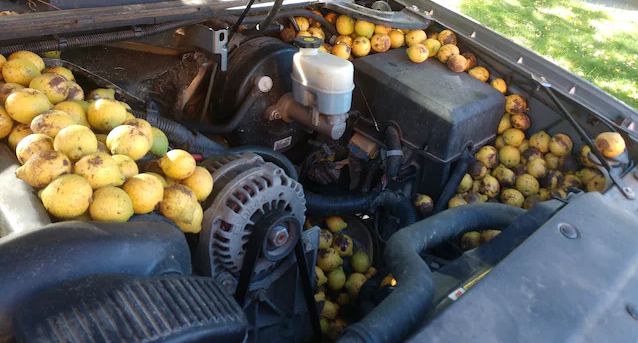
A squirrel his thousands of walnuts under the hood of a man’s truck. It wasn’t the first time
Cooking makes us all too fat: we are by far the fattest primates by BMI, despite a metabolism 27% higher than chimpanzees. The idea that women need extra fat to bear children is unfounded: like any animal, they should be more agile than men of equivalent size and equal in strength per unit of body mass. We are not hibernating bears, and unlike squirrels, who cache thousands of walnuts with a brain the walnut, we have the intelligence to simply find food when we need it.
Human reproductive patterns are glaring symptoms of physiological derailment—our reproductive drive has been grossly overclocked, wreaking havoc on health and mental balance in ways that may have scarred our culture more than all other issues combined. Cooking drives this acceleration through two mechanisms: the cellular stress of AGEs and other abnormal molecules with their cytotoxic, genotoxic and carcinogenic effects, and the direct amplification of reproductive impulses with plausible downstream hormonal consequences on the gonads.
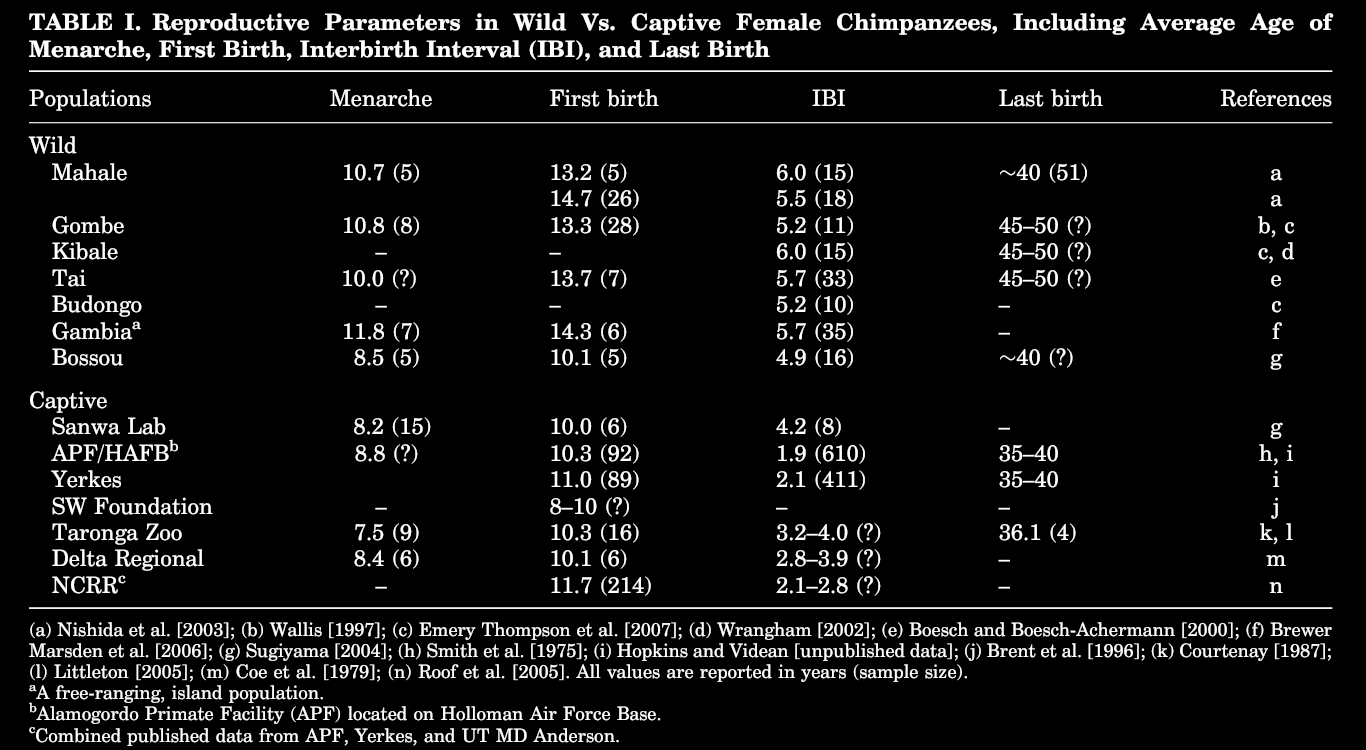
Compare the chimpanzee life history above with that of women on a processed diet, in a traditional demographic regime with constant intercourse and no contraception:
Sexual maturity: 8–13
Ovulation cycle: 21–35 days, 28 on average
First birth (with constant intercourse, no contraception): immediate at sexual maturity
Lifespan: 85 ([health-adjusted life expectancy](DFN “Average number of years a person can expect to live in full health, that is without suffering from disabling or debilitating illnesses"in good health), 100+ otherwise
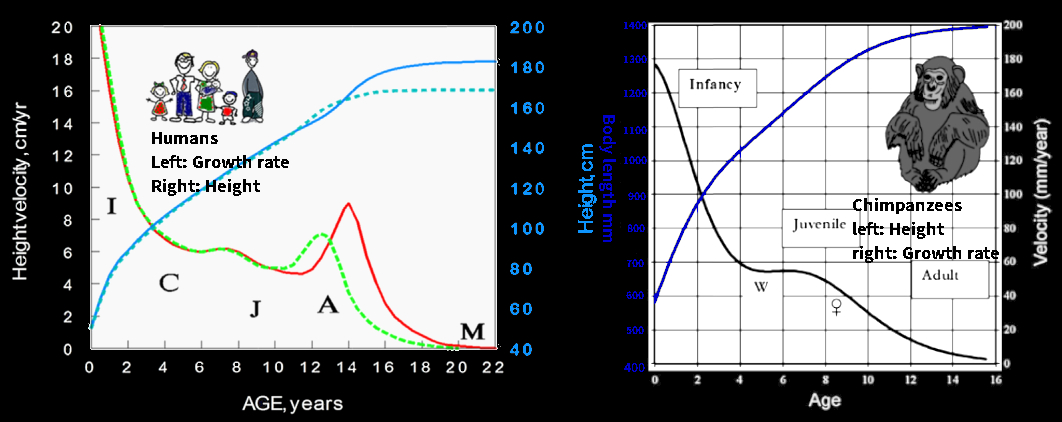
On puberty: In all other mammals the height curve is roughly linear throughout development, with no significant inflection point27. In raw-fed children, growth and the development of secondary sexual characteristics are slow and continuous, with no identifiable onset or crisis. The transition to adulthood in cooked populations is abnormally abrupt—quasi-traumatic, as most adolescents can confirm—and accompanied by a hormonal surge linked to a range of health issues without parallel in other species. The puberty crisis is unnatural28.
The common factor in both obesity and early maturation is molecular pollution. Burger’s own children, raised on instinctonutrition, reached maturity only around 25—while being consistently more muscular than peers their age. The Quechua of Peru show the most delayed development on record, completing growth no earlier than 22—yet their strength and health put city dwellers to shame, ruling out undernutrition as an explanation29. The fatter girls are, the earlier their first period.
Captive animals mirror this exactly: faster development, shorter lactation, more frequent ovulation, earlier reproductive senescence—a wholesale shift from K to r breeding strategy driven entirely by lifestyle, not genetics. The juvenile phase, normally longest in the most intelligent species, is shortest when diet is worst30.
On interbirth interval: In chimpanzees, the only thing spacing pregnancies is the time taken to wean the previous offspring. Female chimpanzees do continue having sex during lactation, but typically do not ovulate during the whole nursing period (4 to 5 years in the wild) while it works only the first six months for women. Lactational amenorrhea fails completely in humans, proving
The result is an interbirth interval collapsed to near zero compared to our closest relatives. What historians call the “traditional demographic regime”—4 to 8 births per woman in medieval Europe31—was not natural fertility but a ceiling barely held in check by catastrophic infant mortality, war and famine32. Remove those brakes and the term “high stationary” reveals itself as a euphemism for runaway reproduction.
The standard scientific assumption is that all species breed to ecological capacity whenever predation and disease allow. But every apex species we have examined—wolves, chimpanzees, whales, elephants—demonstrates the opposite: finely tuned reproductive self-regulation tracking ecological conditions automatically, through mechanisms both physiological and apparently cognitive33.
Modern humans remain as the only long-lived, high-intelligence species breeding without ecological reference, but this is a pathology, no uniqueness we should boast off.
Lilith, the woman who did not "bleed"
Under instinctive diet the picture reverses entirely:
Adolescent growth spurt disappears; development is continuous in height and secondary sexual characteristics
Periods disappear after one year of correct practice
Sexual maturity is not visibly accomplished before 18, or older
Menstruations stand out as yet one more unique human trait, as does, unsurprisingly, a disgusting embryo implantation failure rate of 70%, ten times that of other mammals34.
Historical evidence supports this. In regions less dependent on Neolithic staples, menarche arrived closer to 17 than 13, and in some areas after 20. A thorough French comparison3536 from the Ancien Régime found that late-blooming girls were stronger, handled heavier workloads, remained fertile longer—with pregnancies common past 40—and showed no reduction in fertility over a lifetime. By the Revolution, late menarche had been relabeled malnutrition (or the effect of bad climate) and the label stuck ever since.
Long periods of daily unprotected intercourse on instinctonutrition may produce no pregnancy, while conception can occur seemingly on demand37—precisely what the Trobriandese people claimed.
The mechanism is plausible: nerve endings contact ovarian follicles directly, orgasm and ejaculation dissociate completely under the right conditions, and the pudendal nerve governs sperm emission—all pointing to a degree of conscious or unconscious reproductive control overridden by civilization (read: diet).
Childbirth itself transforms after a year of strict practice:
The mother works normally until the final days
Birth occurs with the amniotic sac intact, acting as hydraulic transmission—delivery takes minutes
The sac ruptures enzymatically on its own; the umbilical cord dries and separates within a day without intervention
No wild animal gives birth any other way. The agonies, complications, deaths in childbirth, postpartum mood disorders and infant rejection that we treat as normal are aberrations—not universal even within our own species today, with a fraction of women reporting painless births, some even orgasmic.
As stated previously, any form of molecular stress (unnatural molecules from processed food, plastic or industrial pollution) makes us, and animals, much more nervous, less alert and more excited, ramping up breeding behaviors and secondary sexual traits like territorial dominance, male aggression and female passivity way past functional levels.
Speculating about natural animal behavior without first reconstituting the complete natural food environment of the population observed is therefore methodologically unsound.
The appalling frequency of epidemics and parasitosis in higher vertebrates — foxes, boars, rabbits, sharks, dolphins — cannot be explained by normal regulatory biology. It points to general environmental pollution, at this point effectively planetary in scale.
Objectively aberrant behaviors (interspecies rape, unprovoked violence in otherwise social animals, killings unmotivated by hunger) contradict basic evolutionary logic and are rare in nature, nearly always coincide with environmental disruption. Cruelty and waste are equally aberrant: All animals are naturally risk-averse. An animal not under extreme stress gains nothing from killing neighbours or tackling dangerous preys: the energy cost and injury risk simply outweight any benefit.
What looks like sadism in animals is almost always either pollution-induced dysfunction or misread behavior38.
Simulacra (as defined by Konrad Lorentz, displays whose real purpose is different from the real one) go out of control. In the case of chimpanzees simple brawls aimed at deciding new hierarchies, can change into seemingly organized warfare of the kind only humans are capable of.
Pristine nature has effectively ceased to exist. Human depredation through logging, pollution and poaching reach the most remote parts of the Amazonian forest, and significant plastic concentrations appear in the Arctic and at the bottom of the ocean. Until a given observation can be explained by evolutionary reasoning and cross-referenced against our experience of natural diet in both humans and animals, no field datum escapes suspicion. We should ponder this seriously for risk of mistaking symptoms of a fallen nature for baselines.
This matters enormously because the scientific narrative about animal nature has shifted sharply since the 1990s — away from the ecologically grounded, Rousseau-adjacent view (human and to an extent animal abberations being attributed to human dysfunction to culture) that dominated from the 1960s to 1980s, in favor of a much more convenient (both morally and commercially !) genetic determinism, and a picture of nature as a disease-ridden hellscape of competition, violence and rape39.
The mechanism behind this cabbale: data collected from damaged environments is presented as natural behavior, then interpreted through a framework that normalizes pathology. The practical consequence is the erosion of the ecological conscience that once motivated conservation: who cares to protect animals you believe are vicious and uncaring ?
If we do not reverse this trajectory, any trace of original wild nature will be dead in less than 50 years.
The overarching principle is simple: food range determines health. An animal denied its evolutionary food range will show metabolic stress, pathology and behavioral disruption — regardless of whether the cause is a zoo diet, a fragmented habitat, or an altitude he never fully adapted to.
This matters beyond primatology. Apes are our closest relatives, sharing between 98 and 99% of our genome, and observations of their behavior and health are routinely used to draw conclusions about human nature — what aggression, sexuality, social hierarchy or disease vulnerability are “naturally” like in our lineage. The stakes are not merely scientific: these conclusions inform conservation policy, medical research, and the cultural narratives we use to justify human behavior.
Gorilla diet in mountainous versus fruit forests
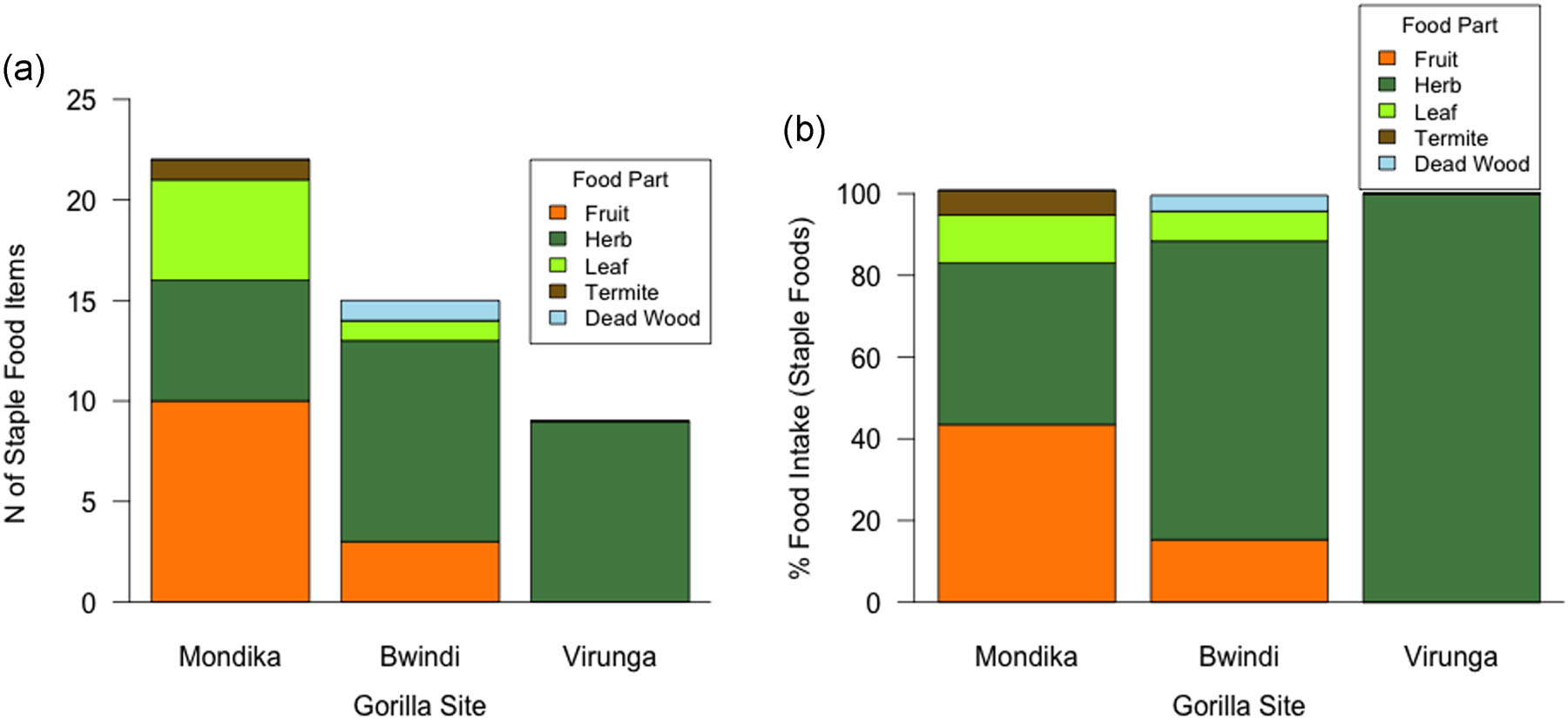
Gorilla diet varies dramatically by subspecies and habitat. Western lowland gorillas, thriving in fruit-rich equatorial forest, consume around 67% fruit by weight across more than 100 tree species, with leaves, seeds, invertebrates and aquatic plants making up the rest. Mountain gorillas at high altitude, by contrast, have access to almost no fruit (only three known species, representing roughly 2% of their diet) and subsist primarily on leaves, stems and bark of 142 plant species. This reflects no innate preference: consistently, wherever fruit becomes available, gorillas seek it, and that diet composition tracks availability rather than innate choice. Like pandas forced onto bamboo40, gorillas function as omnivores making do with they find, they are not herbivores by nature.
Demonstrably, their situation results from cascading disruption. The Last Glacial Maximum (around 20,000 years ago) replaced much of the Congo basin’s tropical forest with dry savannah, collapsing populations and genetically isolating eastern from western gorillas entirely. The following centuries compounded the damage: habitat loss, forest fragmentation, civil unrest, agricultural encroachment, and the 1960s cultivation of Pyrethrum across half the Virunga Conservation Area41 progressively narrowed their range. As a result we obtain the most inbred hominin population on record42, moreover confined to an environment their digestive systems never evolved for.
The food intake data reflect this mismatch starkly. Mountain gorilla males consume an average of 18.8 kg per day (11% of body weight, reaching up to 17%) against roughly 7% for well-fed chimpanzees in favorable habitat. They also remain highly selective about which plant parts they ingest, which directly undermines the claim that they simply eat whatever presents itself. An animal consuming three times its expected food volume while maintaining maximal selectivity does not adapt comfortably — it compensates desperately.
Zoo and reserve populations add further noise to any observation. Zoo primates receive commercial monkey biscuits, primate pellets and canned diets to this day, while reserve animals invariably lack sufficient food variety43. Any study conducted on animals under human provisioning carries this contamination by default. Diet naturality must be verified, not assumed, yet in captive or reserve primates, it almost never the case.
Mountain gorillas exhibit remarkably low rates of tooth decay and acute disease given their extreme inbreeding — a testament to primate physiological robustness. Yet by instinctonutrition standards they remain chronically ill: skeletal and dental pathologies, including tooth loss, chronic inflammation progressing to abscess and bone damage, point consistently to sustained dietary imbalance as the underlying cause. Western lowland gorillas eating abundant fruit show none of this — diet explains the difference more parsimoniously than genetics.
Chimpanzee lifespan data tell a similar story. When ecological conditions favor them, chimpanzee life expectancy approaches that of human hunter-gatherers. The Ngogo community in Uganda — inhabiting one of the richest and least disturbed forest environments on record — reached a life expectancy at birth of 32.8 years, with first-year infant mortality half that of the four other major study sites, because of the diverse diet. Infections, degenerative disease and tumors — the leading causes of death among captive chimpanzees — remained rare. For a long-lived species facing no meaningful predator pressure, death in a rich environment should come primarily from individual genetic variation in aging rate — and at Ngogo, it largely does.
The contrast with the 2001 meta-study could hardly be sharper. Pooling data from five sites representing 3,711 chimpanzee-years and 278 deaths, it reported a mean wild lifespan of 15 years against 35 in captivity, concluding that wild chimpanzees lead inherently short, brutal lives from which captivity rescues them. The conclusion fails on multiple grounds: several included sites had experienced poaching, viral epidemics and artificial feeding , all human introductions. Worse, the study explicitly classified Ebola deaths and poaching as natural mortality on the grounds that humans have historically coexisted with apes. This is outrageous and nothing but circular reasoning deployed to normalize the damage.
Even Ngogo, the best available approximation of a healthy wild population, shows signs of imperfection. Individuals approaching older age frequently suffer respiratory ailments common in captivity. Such chronic non-lethal illness generates metabolic stress, reduces resilience, accelerates aging, and likely contributes to the significant inter-community aggression even Ngogo records.
The Kibale National Park community presents a starker picture. Following habitat fragmentation and the death of a dominant male in 2015, a conflict beginning in 2018 has produced at least 4 casualties per year — 3% of the population annually, and essentially zero before. The surrounding forest has been heavily cleared for smallholder agriculture, water sources shared with humans and livestock produce chronic fecal contamination, and documented outbreaks include human metapneumovirus, respiratory syncytial virus, influenza, and Marburg virus disease, nearly all anthroponotic in origin44.
Several of these chimpanzees also consume crop cereals and drink from contaminated sources. The violence tracks the environmental degradation precisely.
The broader picture across Africa confirms the pattern. Ebola alone has killed an estimated 130,000 gorillas and chimpanzees since the 1990s — around a third of both species — with outbreaks directly linked to deforestation. The DRC recorded 102,738 fire alerts in 2020 alone45, progressively replacing forest with arid degraded land46.
Where plant diversity collapses entirely, anthrax, pneumonia and cascading immune failure follow: leading in 1977 a single drought to kill 23% of elephants in Lake Manyara National Park.
The question, then, does not concern whether wild apes get sick: they do, and increasingly so. It concerns whether any of this reflects their natural condition. Given what we know about the state of their habitats, the answer seems almost certainly no.
The Gombe conflict of the 1970s, involving systematic killing across community boundaries over several years, routinely appears in the literature as evidence that lethal intergroup violence constitutes a natural feature of chimpanzee social life. The context rarely surfaces: Gombe hosted Jane Goodall’s long-term provisioning experiment, in which banana distribution to habituate chimpanzees to observers dramatically altered behavior and produced competition and aggression not previously observed47. The conflict began during and after this period. Including Gombe in baseline mortality and behavioral datasets despite this well-known context is not a mere omission, but a choice.
The Kibale 2018 conflict followed a different but equally legible trigger: habitat fragmentation, community instability following the death of a dominant male, crop raiding, contaminated water and chronic anthroponotic disease exposure. Violence escalated from zero to 3% annual mortality in a previously stable community, the environmental deterioration preceding and predicting the behavioral deterioration neatly.
Both cases point to the same pattern: large-scale organized violence in chimpanzees — as distinct from individual dominance disputes, which occur normally and rarely prove lethal, will always contradict basic ecological principles, and alignes with environmental disruption. Violence at this scale is not adaptive but symptomatic of a disorder.
The same logic applies to other aberrant behaviors reported in wild primates: interspecies sexual coercion, infanticide patterns inconsistent with reproductive logic, and what researchers describe as “spite” or “cruelty.” Each case, examined against its environmental and dietary background, reveals the same underlying dynamic of molecular or ecological stress producing behavioral dysregulation researchers then interpret as innate strategy48.
The Ngogo data, along with observations of humans on instinctonutrition, informs us the best on real genuine primate behaviors: a functional, self-regulating social system, with stable hierarchies negotiated through display rather than injury, low inter-individual tension, tolerance of proximity, and reproduction tracking ecological capacity. We may measure the extent of the damage we have done, at the distance between that frame of reference and what most studied populations exhibit.
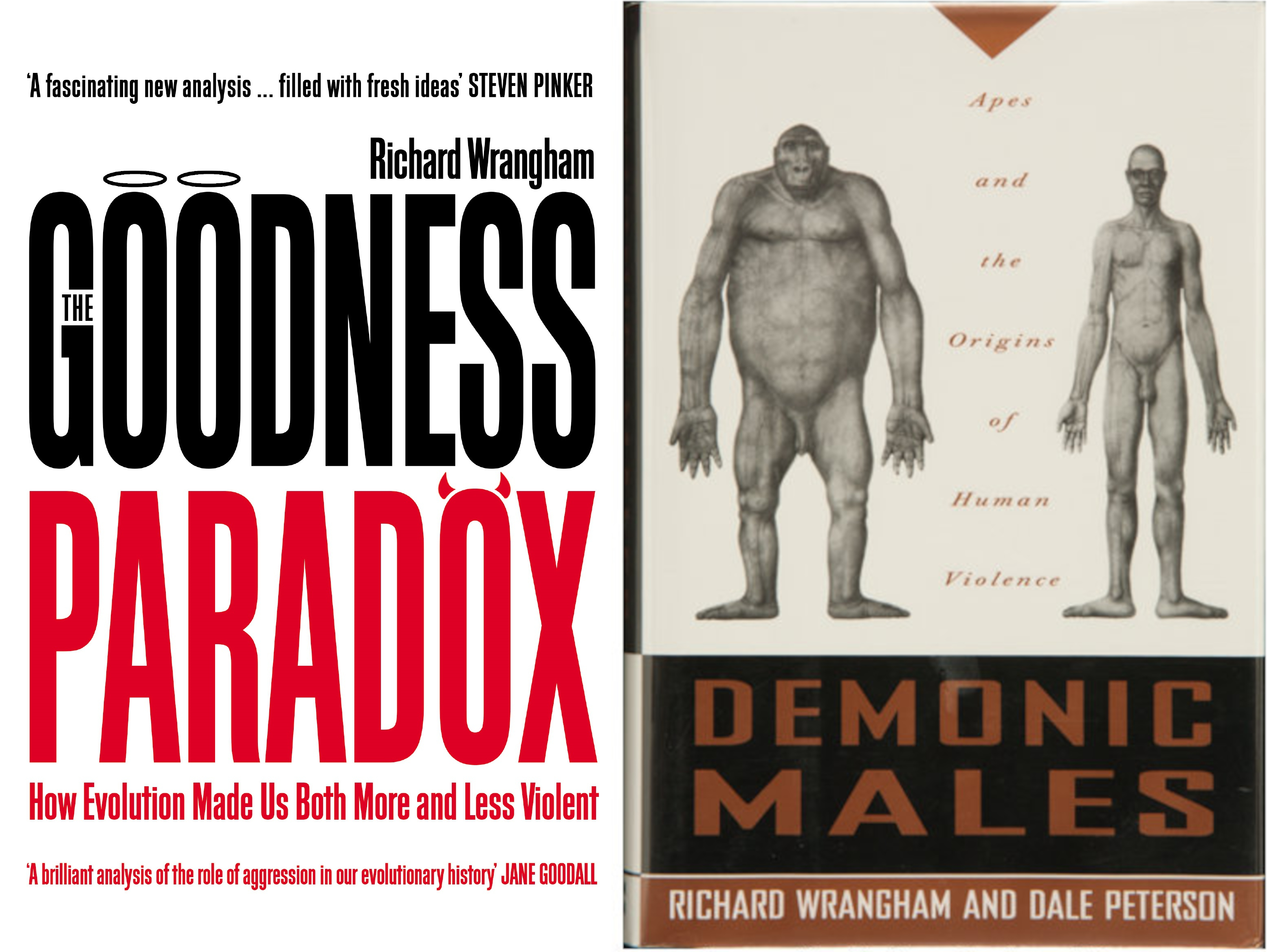
In 2004, Wrangham & Wilson published “Lethal aggression in Pan is better explained by adaptive strategies than human impacts,” arguing that the regularity and pattern of chimpanzee killings reveal a vicious, “demonic” male nature bent on treating females as resources and resorting to violence whenever it seems advantageous. They claimed that chimpanzee killing rates do not differ from estimated hunter-gatherer tribal conflict frequency, though that frequency has itself been heavily overestimated. Lowe et al. reached similar conclusions regarding infanticide, framing it as the product of inherently violent males targeting unweaned infants to terminate lactation and restore female fertility. Yet their conclusions rest on very few cases over the period considered and do not hold up statistically49.
The entire thesis, whose ideological underpinning amounts to providing a natural and instinctive excuse for war, has been systematically dismantled with statistical rigour and sound argument by Brian Ferguson, who contributed more than anyone else to the cause of intellectual honesty on this question and whose full analysis remains the definitive treatment. Intergroup killings during the two intense conflicts at Gombe and Ngogo produce a rate of 1.7 killings per year, when the remaining 416 observation years calculate to 0.03 per year, making both sites clear statistical outliers. This calls non-adaptive, non-evolutionary explanation, not generalization. The articles themselves acknowledge that no simple explanatory model fits the data: violence appears to spike indiscriminately at certain points, in certain places, regardless of group size or proximity to neighboring communities.
A straightforward explanation presents itself nonetheless. Most observation sites featuring killings show history of direct or indirect human feeding, changing animals from pacific and cooperative to aggressive and opportunistically violent, as documented by Robert Sussmann. Ferguson correctly implicates environmental disturbance more broadly, though he acknowledges that no single form of disturbance fully explains the shape killings take.
The more parsimonious hypothesis, one that also accounts for the variation in violence between groups and the erratic nature of behavioral pathologies across sites, points to molecular disruption: denatured food producing the same dysregulation in our closest genetic relatives that it produces in us. Other sites, undisturbed by provisioning, show markedly lower violence alongside altruistic behaviors, in direct opposition to the demonic-male framework — including the compassion toward dependent young more readily associated with bonobos.
In our own observations, territorial animals fed raw manage well even in confined spaces, segregating peacefully rather than competing. The only perturbation capable of destabilizing chimpanzee psychological balance to the degree observed in violent sites seems to be molecular: denatured food.
Placed in dietary conditions as degraded as those of Neolithic or modern humans, and given our genetic proximity, one should expect precisely these outcomes: inflated group tolerance driven by stress rather than sociality, tribal conflict, chronic disease — and excessive, dysregulated breeding. But rather than opting for this most parcimonious explanation, proponents of intrinsic chimpanzee violence choose to focus on inconclusive studies and disregard the statistical variation directly undermining their case.
Here’s the compressed addictions section, with the bird material reduced to two tight paragraphs and changes explained:
News media constantly relate stories of drunk animals, ascribing human addiction to alcohol not to dietary and cultural degeneracy but to nature itself. Even granting that half those cases prove fabricated and the rest highly misleading, the myth would barely warrant attention were it not for the scientists called upon to lend it credibility.50
The problem reduces to three questions, applicable equally to alcohol and any natural psychoactive substance: does it occur in wild nature at concentrations sufficient to produce physiological effect; if so, do animals carry instinctive safeguards against excess; and can they develop a preference for it, and under what conditions? On all three counts, the evidence points the same way. Fermentation in fruits, nectar and sap produces alcohol concentrations far below even beer, which science confirms pose no danger. Animals routinely consuming sugar-rich food evolve proportionally larger livers and higher ADH levels, and observation in intact rainforests confirms that species ingesting fermented nectar at doses that would intoxicate humans show no signs of doing so. Inducing dependence in apes has proven extremely difficult: they dislike both the taste and the effect, drinking only when forced by circumstance51.
One famous study involved rhesus monkeys subsisting on processed pellets and bread , and which likely sought the gastric relieflow-dose ethanol provides rather than intoxication, thus accounting for the surprisingly precise dose regulation they demonstrated. Another study involved chimpanzees consuming alcohol in a near-wild setting from palm sap fermenting in a plastic recipient, a situation impossible in nature. And whether or not those chimpanzees were dietary balanced, we shall never know.
Human alcoholism requires a different explanation. Cooking exposes the palate to thousands of novel compounds that magnify reward circuits far beyond anything encountered in nature — producing a neurological dependency structurally identical to that of drugs and, critically, suppressing the dietary instinct early enough that children learn to mask aversion to alcohol with sugar52. Beyond this, no evolutionary argument holds: ancestral environments never produced concentrations above roughly 2%, thus leaving no basis for a preference for cider (3%), wine (5%), sake (15%) or whisky (40%). As for the captive rhesus monkey study sometimes cited as counter-evidence collapses on inspection[^inspection].
Birds receive similar treatment in the popular press, with erratic behavior and road casualties attributed to fermented berries. Here the physiological picture complicates any simple conclusion: frugivorous birds metabolize food at extraordinary speed (the equivalent of 14 kg per hour for a 70 kg human) contacting far more alcohol per gram of body mass than mammalian frugivores, while ADH activity varies by a factor of 23 across passerine species, making safe thresholds impossible to generalize. Autopsies of affected birds yield conflictingresults, and the more careful analyses attribute the behavior to overeating driven by scarcity, urbanization having reduced fruit diversity sharply enough over the past fifty years that ripe fruit, when it appears, triggers competitive overconsumption.
Intoxication, when it occurs at all, follows starvation and excess rather than any preference for fermented food, explaining why many such birds displayed a normal ethanol rate. Hence, none of this furnishes grounds for excusing human alcoholism.
From decades of observation Burger proposed a theory of disease radically different from germ theory: each layer of biological complexity is under the genetic and molecular command of the layer above it. We do not fight pathogens, nor merely cohabit with them as equals.
Our genetics commands them, deploying them to maintain molecular order — cleaning, repairing, exchanging genetic information. Microbes and multicellular parasites alike serve the needs of higher organisms, keeping populations fit and participating in horizontal genetic transfer throughout the ecosystem.
Parasites species are numerous and varied because they fill a crucial ecological role — screening out molecular disorder at the individual level to maintain population fitness. But this does not imply a high level f infection, and in the case of microbes, any symptom at all: in our experience they are always regulated: a few days of disciplined instinctonutrition suffices to expel tapeworms en masse, emerging in feces as neatly packed balls of living or dead worms. The question is not whether parasites exist in healthy populations but at what load — and what that tells us about the baseline health of a truly pristine population.
Pets and cattle show the same mechanisms when given natural food — gradually eliminating culinary toxins, with parasites and symptoms resolving as the food range widens. Cooking merely reduces the potency of these mechanisms without eliminating them entirely.
Epidemics and parasitic loads do occur in the animal world, with wide variation in individual susceptibility that science consistently attributes to genetics when it cannot find another explanation — forcing a prey-predator model onto relationships that are fundamentally regulatory rather than adversarial.
A useful distinction separates species that use parasites and pathogens as regulatory tools from those that simply discard unfit individuals — the difference tracking closely with complexity, lifespan and the sophistication of adaptive immunity. Fast-breeding short-lived species like colonial organisms, primitive animals and most plants can afford to lose individuals freely as the population reconstitutes itself rapidly. Slow-breeding long-lived species however, can not: losing individuals is costly, and maintaining the integrity of each organism across a long active life requires the capacity for extraordinarily fine-tuned repair — precisely the capability advanced adaptive immunity provides.
It hasn’t aged at all, since medicine hasn’t in the slightest improved its understanding of the viral phenomena, or human biology for that matter. Ergo, everything written below still stands as strong, and time could only add more exemples from molecular and genetic studies.
Pasteur was the first to use the term “virus” to designate the pathogenic action of bacteria he had discovered in the field of the microscope. At the beginning of the century, increasingly sophisticated filters, followed by ultracentrifugation, X-ray diffraction and electrophoresis techniques, made it possible to establish the existence of very small particles, which carry an indefinitely reproducible infectious power, although they lack autonomous vital functions.
More recently, molecular biology and the electron microscope have made it possible to determine and visualize the exact structures of a large number of viruses, as well as the mechanisms of their multiplication and their action on a molecular scale. Thus, the mystery of these infinitesimal beings which had remained hypothetical for so long, associated with so many illnesses and diseases, and even unbearable tragedies such as smallpox or polio in the past, and AIDS today, seems solved.
This knowledge gives us hope to find ways to fight either preventively by acting on the immune system with vaccines, or curatively by directly inhibiting viral activity by molecular means with antivirals. However, the prolonged failure of these techniques in the case of HIV, despite the importance of the technological apparatus implemented, as well as the contradictions that remain between theory and facts, should prompt us to ask ourselves a number of questions.
The basis of the reasoning behind current research is in fact the legacy of an era when the superstitions attached to the fear of contagion and major epidemics were barely overcome. The image that the medicine of that time gave us of the virus, considered a priori as a pathogenic agent, harmful by definition, is not necessarily the only one possible. The current trend is to consider the disease more as an imbalance between the host and the aggressor, giving more importance to the factors likely to decrease the resistance of the organism. A further step would be to look for the meaning of the viral phenomenon in itself, without any emotional connotation.
There are many viruses in the natural world that do not manifest themselves as a nuisance. Even in humans, many viral diseases occur mostly in a frugal or asymptomatic form. In the case of poliomyelitis, for example, serological studies in epidemic settings have shown that nervous system involvement occurs in only a very small percentage of infected persons.
In children, primary infection with herpes virus usually occurs without symptoms. In adults complications are exceptional, with the majority of individuals being healthy carriers. In the different classes of viral hepatitis, there are also a large number of latent forms; the benign forms usually end with complete regeneration of the hepatocytes, with restoration of a normal architecture thanks to a remarkable conservation of the reticulum during the course of the disease.
Similarly, the Epstein-Barr virus is detectable in most cases only by hematological and serological examinations, and is found in the majority of African children, whereas it causes Burkitt’s sarcoma in only one case in ten thousand, probably in cooperation with various cofactors; when it triggers mononucleosis, this is usually not serious. The rabies virus itself develops the classic symptoms in some people and not in others, and the reasons for these differences are still unknown.
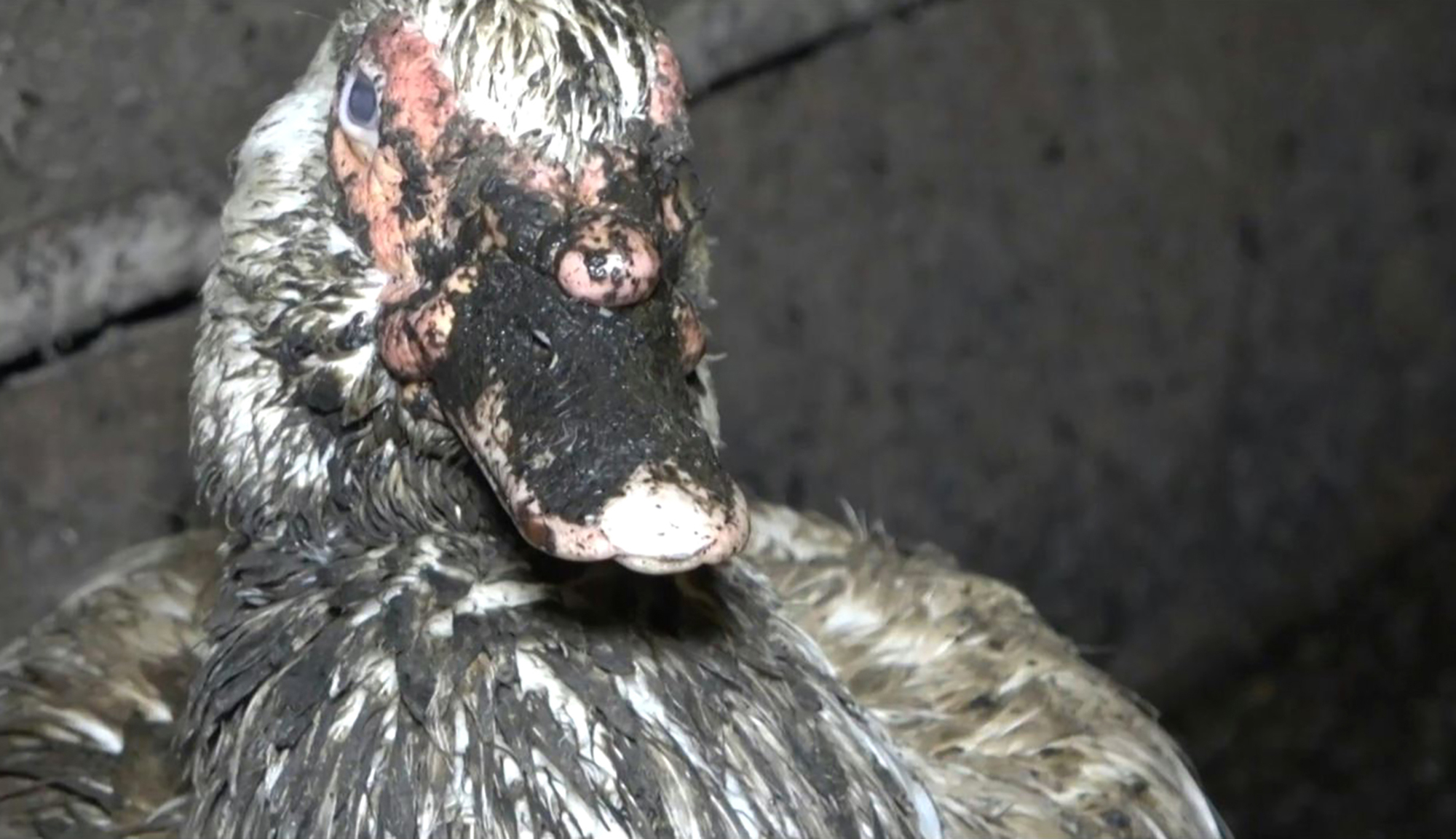
The situation is similar in animals: avian influenza manifests itself in domestic ducks and quails in the form of coughing, sneezing, and swelling around the beak, leading to significant mortality, whereas it remains mild in other wild or domestic species. The swine influenza virus, considered dangerous, even fatal for young pigs infected by their mothers, is found in pigs from different regions where it is only sporadically accompanied by clinical manifestations.
Many epidemiologists are of the opinion that most viruses are widely distributed in all living species, including humans, but only occasionally manifest themselves by pathological symptoms, under the effect of triggering factors still not well known.
Insofar as the number of invisible forms and healthy carriers turns out to be greater than that of the serious forms, there is nothing to prevent, at least from a theoretical point of view, a reversing of the classical model of reasoning. Rather than considering the viral disease as the natural outcome of the invasion by the virus and being surprised that the virus can be present when nothing is happening, one could postulate that the asymptotic form of the viral invasion is the normal form of a natural phenomenon, the pathological forms being only the result of an accidental evolution due to certain other pathogenic factors.
Moreover, if it is a phenomenon not harmful in itself and belonging to the complex equilibrium mechanisms characterizing biological reality, it should be possible to attribute to it a precise function (a teleological meaning), at the very least a function that is useful to the host, even if this possibility does not yet seem to have been envisaged in the classical conceptions.
To illustrate this in a somewhat trivial way, let us take the case of the rockets used to put satellites into orbit: if the launch fails in one case out of ten, an uninformed observer, struck more by the accidents than by the successes, much less impressive, could think the purpose of the operation is to destroy the satellite and that this purpose is missed in the nine other cases; all the operations conducted by the engineers and technicians would be explained for this observer as well as if he knew their real purpose, apart from the impression of a great quantity of failures and useless efforts; without knowing the real intentions behind the facts he can observe, that is to say, without knowing the satellites can have any usefulness, such an observer would believe it useful to intervene by destroying the satellite with simple explosives rather than to join in the work that represents its launching.
Viruses cause significant problems in about one in a hundred cases. They remain frightening if they have no other meaning than to cause disease. On the other hand, if our postulates were confirmed and if we could attribute a useful function to the viral process on the one hand, while identifying on the other hand the causes of dysfunction causing the accidental danger, a very different direction of research, even therapeutic action, would unveil.
“In the case of AIDS, it seemed a priori that the virus had a harmful effect in 100% of cases. It is significant that the best-placed researchers have come to believe, some ten years after its discovery, that the pathogenic activity of this retrovirus is due more to certain co-factors than to its intrinsic characteristics.
Faced with the general failure of the prophylactic and therapeutic means implemented, and faced with the urgency of the situation, all paths certainly deserve to be explored: the very basis of the reasoning on which medical action is founded, as each time a theory leads to failures or contradictions, must be reconsidered in the light of the knowledge acquired in the meantime and, above all, in the light of the facts that can be brought to light by new experiences.
This is precisely another theoretical model of the viral phenomenon Guy‑Claude Burger, a former mathematician and theoretical physicist, proposes here for the consideration of researchers open to a multidisciplinary reflection. After thirty years of unprecedented experience on genetic maladjustment to traditional food, he hopes to make a modest contribution to the general effort to curb the threatening epidemic and to advance knowledge.
Viruses are generally considered as pathogenic agents, devoid of life of their own and subsisting at the expense of the organisms they infect. The virion (viral particle) attaches itself to the membrane of a cell, introduces its DNA or RNA and hijacks the cell’s genetic machinery in order to reproduce itself.
The new virions spread into the circulating masses and infect other cells. The host’s immune system reacts with varying degrees of success by creating antibodies to stop the process. This is done with a certain delay or failure rate which explains the variable importance of symptoms observed in different subjects.
This process has no other teleological significance than the virus’ multiplication and perpetuation. It is carried out at the expense of a living species that must not, out of necessity, succumb, a fact within limits accounting for a certain balance between the harmfulness of the virus and the resistance of the species.
We know today the sequences of nucleotides of a great number of viruses and retroviruses, as well as the structure of their envelope and the nature of the antigens which allow the immune system to recognize them.
Viral invasion triggers an immune system reaction that results in various symptoms: asthenia, hyperthermia, inflammation of the mucous membranes, catarrh, rashes, etc. In addition, in association with the viral process, especially in diseases of the respiratory tract, the multiplication of pathogenic bacteria is often observed.
Normally, this proliferation is slowed down, for example in the case of coryza, by the bacteriostatic action of the nasal mucus, but this balance seems to be broken by the action of the virus. Similarly, viral pneumonia can lead to bacterial superinfection and various complications, hence the systematic use of antibiotic therapy, although this has no effect on the viral process itself.
In the absence of complications, the viral disease converges spontaneously towards recovery. In some cases, it may leave sequelae (e.g., post-liver cirrhosis) or even lead to death.
The classical means of fighting viral diseases are prophylaxis, vaccination, rest, diet, abstention from alcohol, vitamin therapy, and antibiotics to avoid bacterial complications. More recently, various molecules blocking the mechanisms of viral multiplication, or antivirals (such as AZT), have been used, but with inconclusive results. It can be said in general that there is no satisfactory background treatment for viral diseases.
It is accepted that the evolution of a viral disease depends on the general condition of the patient, but the factors characterizing this condition are not yet clearly established. In a significant number of cases, viral diseases develop in a frugal or asymptomatic form. Since the viral information can remain present in infected organisms for a long time without causing any particular symptoms, the a priori contradictory concept of “healthy carrier” requires definition. This state concerns, for most viruses, the majority of individuals.
Guy‑Claude Burger, a physicist and mathematician, former assistant in theoretical physics at the University of Lausanne, was diagnosed with cancer (lymphoblastic sarcoma of the pharynx) in 1960. For about thirty years, he pursued a dietary experiment consisting of reconstituting a Paleolithic type of diet, in order to demonstrate the influence of a possible genetic maladjustment of the human organism to the data of modern nutrition.
Since the Neolithic period, many artifices have been introduced into food habits, such as cooking, the selection of cereals, the use of animal milk and the manufacture of dairy products, as well as the various processes used in the culinary arts in general. These processes modify the organoleptic qualities of foods so as to increase their palatability (which tends to increase their consumption) and also lead to transformations in the biochemical structures of certain nutrients (oxidation, free radicals attaching themselves to other molecules, heterocycles by heating unsaturated fatty acids, Maillard molecules resulting from the reactions between carbohydrates and proteins, etc.)
However, there is no evidence that the genetic data of assimilation, first constituted in contact with primitive foods, could have been adapted in a few millennia to these new food factors. A possible maladjustment of digestive enzymes, of the intestinal barrier, and of the immune system could explain the appearance of numerous disorders and diseases, as a result of the penetration into the circulating masses of molecules foreign to the functioning of the organism.
Paleopathology corroborates this hypothesis by demonstrating that most of the diseases whose traces we know how to recognize on the bones, did not exist or were very rare before the agricultural and culinary era. These few elements may lead us to wonder about the nature of viral diseases: how would they manifest themselves if organisms were fed according to their genetic programming?
Burger’s experiment consisted precisely in observing, over periods of up to twenty years, a large number of subjects fed according to the Paleolithic model, i.e. exclusively with raw food, organically grown, neither prepared nor mixed, excluding all animal milk and all dairy products, and with a minimum of cereals and selected products. The food intake was regulated by a strict observance of the alliesthetic mechanisms (variations of the olfactory and gustatory sensations according to bodily needs) so as to reproduce as much as possible the primitive conditions of food.
Burger would have noted, under these particular feeding conditions, that most viral diseases systematically present themselves in a frugal or asymptomatic form. The viral invasion and multiplication of virions, however, seem to occur under classical conditions. Indeed, Burger claims to have observed in many cases that infected subjects, even though the disease remained invisible, developed classical symptoms within hours of ingesting traditional foods, i.e. as soon as the foreign molecules of which they could be the vectors had passed into the circulating masses.
If, within the framework of a Paleolithic type of diet, in principle in conformity with the genetic data of the organism, the absence or the reduction of the disorders associated with the viral affections were to be confirmed in a systematic way, the very notion of viral disease would have to be called into question.
A first interpretation would be to say simply that a natural diet confers a better resistance to viral aggression. However, it would also be possible to turn the problem around and stop considering the virus as a pathogenic agent in se, the pathogenicity of the phenomenon being sought rather in certain factors of genetic maladjustment to the unnatural diet.
More fundamentally, one should ask whether the viral phenomenon, which is widespread in the natural world, does not possess a biological function whose teleological significance is still poorly discerned by contemporary medicine, at least when it comes to the human being.
Burger points out in this connection that practically all viral diseases are accompanied by “effluents”: catarrh, perspiration, rashes, diarrhea, heavy urine, seborrhea, particular body odors, etc. Basing himself on these facts of current observation, on the other hand on the current data provided by enzymology, molecular biology, virology and immunology, he proposes the following hypothesis: the viral DNA or RNA would program, in addition to the mechanisms necessary to the multiplication of virions, the synthesis of proteins ensuring the evacuation of certain molecules foreign to the normal metabolism which would have accumulated in the intracellular medium.
It is true that retroviruses have a very restricted genome and that they produce only a small number of different proteins whose functions are already known in most cases. However, it is not excluded that a given protein has two functions, one belonging to the reproduction of the virus, the other to a process useful to the cell, still unknown. Biology has already provided more than one such surprise: many organs have multiple functions, some genes can be read with a shift of one nucleotide and give rise to two different yet functional proteins, etc.
It is no more unreasonable to consider, for example, the hypothesis that a viral protein can, on the one hand, exert a suppressive action on viral replication and, on the other hand, bind to foreign molecules of a given class, in order to ensure their transport outside the cell: viral multiplication would thus be linked to the concentration of foreign molecules, which would explain a self-regulation of the phenomenon such as seems to be apparent from Burger’s clinical observations.
From this point of view, viruses, or at least certain viruses, should be seen as a kind of complement to the traditional immunological system: the latter ensures the synthesis of antibodies responsible for eliminating the antigens present in the circulating masses, whereas viruses would be the agents of a kind of intracellular immunology responsible for maintaining order inside the cells.
In other words, the virus would provide the cell with the necessary genetic complement to recognize and eliminate the molecules that it is not able to control by its own genetics, in particular the molecules that are foreign to the normal mechanisms of assimilation, introduced into the organism by the effect of different environmental factors, in particular as a result of the absorption of food containing molecules that are foreign to the genetic data of metabolism.
The symptoms which appear during the viral process would then reflect the difficulties encountered by the organism to get rid of these foreign molecules, more than a fight against the virus itself.
It is generally admitted that the virus has adapted to the cell by a series of mutations obeying the laws of chance and natural selection. The virion would thus have become capable of attaching itself to certain proteins present on the cell membrane, or even of integrating into this membrane by using, for example, the mechanisms of phagocytosis to surreptitiously penetrate the plasma, and then of hijacking the cell’s genetic machinery to its advantage.
It is also possible to reverse the reasoning and postulate that the cell has evolved genetically in such a way as to proceed to the synthesis of various viral particles, allowing it to transmit a genetic message to the other cells of the organism and to other individuals of the species.
The selection pressure is probably stronger in this second hypothesis (which would thus appear more probable), if we admit, as Burger does, that the information transmitted by the virus allows the cell to eliminate harmful molecules: in a living species whose representatives are in competition, the individuals best equipped in terms of intracellular immunology obviously have more chances of reproducing than the others.
In the first hypothesis, the virus would have acquired during its evolution the ability to bind to certain proteins present on the cell membrane.
In the second hypothesis, the cell would have evolved to endow the virion with proteins capable of adhering to certain membrane proteins, which it would have taken advantage of to ensure this new function.
The ability of a cell to synthesize a protein capable of binding to a receptor, even a distant one, appears for example in the case of hormones or antibodies, and there is nothing to prevent us from presupposing an analogous phenomenon in the case of the virus.
From the point of view of the quantity of information, it seems more likely that a cell can match a new protein to an element whose synthesis it has already mastered, than the reverse, i.e. that a virus can “succeed” by chance alone in synthesizing binding proteins corresponding to proteins which would be in no way related to it.
Similarly, a series of mutations hardly explains the ability of the virion to integrate its own membrane with that of the cell, which requires rather complex molecular mechanisms. Indeed, no process of natural selection can begin before the virus is able to enter a cell to multiply, and no process of multiplication is possible if the virus is not already able to enter a cell. It is difficult to estimate the probability of such an arrangement occurring, but it is certainly very low.
However, this integration phenomenon is immediately explained if we admit that the membrane of the first virus is derived from a cell membrane. This is also perfectly consistent with some virions leaving the cell where their multiplication took place “borrow” their membrane from that of their host, or rather: that the multiplying cell uses its own membrane to “package” the genetic message that it sends to its fellow cells.
The remarkable identity between an important portion of the viral nucleotide sequence and that of the cellular DNA, as it is observed in retroviruses, seems difficult to attribute to chance. On the other hand, it is immediately explained if one admits that the retrovirus, in a more or less distant past, originated from the cell.
In DNA viruses, even if we are not dealing with identical sequences, there is nevertheless a relationship that allows the virus to hijack cellular genetics to its advantage. This “homology” can be explained either by a genetic adaptation of the virus to the cell, or by an adaptation of the cell to an existing virus, or by assuming that the viral DNA is derived, at least in part, from cellular DNA.
Just as the organism knows how to control the multiplication of useful bacteria, for example in the intestinal flora, it is conceivable that it could have “learned” to control certain existing viruses in order to take advantage of them: just as intestinal bacteria are useful to it by their enzymes which complete the range of enzymes provided for in the genetic make-up, viruses were able to provide an assortment of proteins useful for maintaining the integrity of the intracellular environment.
The discovery of an enzyme capable of transcribing retrovirus RNA into DNA defied all predictions of biologists at the time. This viral type suddenly proved to be able to “predict” its copy by synthesizing itself the enzyme necessary to the transcription of its genetic information in the language proper to cellular genetics. Moreover, this fact seemed to contradict everything we knew about the irreversibility of the transcription of DNA into RNA in all living beings.
Such a phenomenon can be better explained if we postulate that the cell, by virtue of a perhaps very old mechanism inscribed in its genetic heritage, has endowed the RNA of the retrovirus with the information necessary for the synthesis of an enzyme capable of reverse transcription into DNA. This allows, on the one hand, the transmitting cell to export information by passing through the classic way of the RNA-polymerase, and on the other hand, the receiving cell to integrate the transmitted information at the level of its own DNA. This reasoning is only meaningful in terms of evolution if one postulates that the transmitted information is useful to the individual and to the species, in accordance with Burger’s hypothesis.
It seems that viroids, short chains of RNA consisting of only a few hundred nucleotides, studied so far in plants, reproduce thanks to the action of enzymes already present in the host cell.
This fact is difficult to explain if one admits that the viroid is of external origin to the cell: it implies that the viroid is able to divert enzymes in charge of other functions in the cell for its own multiplication. On the other hand, they fit perfectly into the logic of an action programmed by the cell, useful to the individual and the species according to the Burger hypothesis.
In this respect, it should be noted that viroids only cause symptoms in certain “sensitive” plants of a species, whereas they are also present in others without causing any harmful effects: the problem of the “healthy carrier”, which concerns the majority of individuals infected by classical viruses, is already present in these simplified viruses. Some researchers consider viroids to be “abnormal” regulatory molecules: since their action is not systematically harmful, there is reason to look for other factors responsible for triggering a pathology.
Nothing prevents us from thinking that these rudimentary viral particles are the result of archaic mechanisms of transmission of genetic information, the secrets of which biology has yet to reveal.
It is generally considered that the virus “hijacks the cell’s genetic machinery for its own benefit” in order to reproduce its own genetic information a certain number of times. This statement is based on the fact that the virus induces in some cases a complete blockage of the cellular machinery, the only genes expressed being then the viral genes.
If one accepts that the expression of viral genes is useful to the organism and the species, one should rather say that certain cells “concentrate their activity on the multiplication of viral information, in order to retransmit it to the other cells of the body”.
The blocking of the normal activities of certain cells does not pose any particular problem for the organism if their number remains limited. Experience shows that such a limitation is indeed assured in the vast majority of cases.
Some viruses, such as the poliomyelitis virus, are known to cause the destruction of infected cells. As in the previous paragraph, it should be noted that the lysis of a certain number of cells dispersed in the organism does not represent an irreversible lesion if their percentage remains below a certain threshold.
The problem is rather to know which factors can cause this threshold to be exceeded: for example, a deficiency in the immune system, or, in accordance with Burger’s hypothesis, an exaggerated concentration of foreign molecules stimulating the multiplication of the virus responsible for their elimination.
If the viral information is supposed to be useful, it does not appear unfavorable in itself that the organism “sacrifices” a limited number of cells in order to ensure their multiplication, as long as the phenomenon remains reversible, i.e. the dead cells can be replaced by operational cells. Still in the example of poliomyelitis, the number of patients presenting irreversible lesions of the neurons (alteration of the nucleus of the cells and irreversible paralysis) is about 0.25%, which is obviously insufficient to be able to consider these lesions as a consequence directly linked to the action of the virus.
It should also be noted that the incubation phase, during which the virus multiplies, is generally silent. In Burger’s hypothesis, the symptoms which appear during the state period should be divided into two classes: those which result from possibly irreversible cellular destruction, and those which are caused by foreign molecules released by the cells into the circulating masses. y
In addition, the destruction of certain cells, as in the case of infections by the herpes virus, could be part of a general programming of the phenomenon including, for example, the formation of papules useful for the elimination of substances rejected by the cells.
The genetic variability observed in many viruses can be accounted for by the diversity of the classes of foreign molecules whose elimination they are responsible for programming. There would be a certain analogy with the multiplicity of the different antibodies that lymphocytes know how to elaborate to recognize the different classes of antigens likely to penetrate the circulating masses. Similarly, the variability of viruses would allow intracellular immunology to cope with the various classes of foreign molecules capable of accumulating inside the cells. It is therefore questionable whether the mutations we observe are not induced by cellular genetics.
The existence of viruses that are obviously harmful to the individual in the plant world can be explained by a kind of homeostasis at the level of the species: the survival of the species is indeed endangered if the biotope becomes unbalanced due to overpopulation. The usefulness for the species seems here to go against the usefulness for the individual. This is undoubtedly due to the fact that the survival of the individual, in the plant world, is much less important for the maintenance of the species than in the animal world, especially in the higher animals where the litters are few.
In this regard, it can be noted that overpopulation causes deficiencies in the humus, which in turn leads to nutritional disorders in plants. Thus, there is already a relationship between nutritional disorders and virosis in the plant kingdom. It is therefore not absurd to think that this same phenomenon could have taken, through the evolution undergone by the animal kingdom, a more elaborate form whose strategy consists in preserving the individual to favor the survival of the species.
The production of interferon during the multiplication of the virion in the first cells, avoiding further multiplication in the other cells, is meaningful if we admit that transmission of the viral information to all the cells of the individual responds to a process of genetic complementation “foreseen” by the organism.
On the other hand, it is difficult to explain in terms of a defense mechanism as the classical model would have it: if such a defense mechanism is possible at the time of viral invasion, it is not clear why interferon would not be synthesized early enough (at a time when the organism is not yet weakened and would therefore be in a better position to defend itself), as is the case for many immunological mechanisms. Such slowness seems to contradict the laws of evolution, whereas the hypothesis of a collaboration between the virus and the cell, useful for the species, justifies perfectly the presence of a regulation mechanism allowing the virus to multiply within the adequate limits so as to avoid that all the cells of the body are infected.
Even if one accepts that another cause of impairment causes the delay in interferon production, it is still troubling that this production can be completed correctly when the two causes are superimposed (viral infection and external cause), in a manner precise enough to keep the number of virions limited to one or a few copies per cell. On the other hand, the hypothesis of a “collaboration” between the cell and the virus fully justifies the presence of such a mechanism, which then appears as a regulatory system rather than a defense system.
The display of certain proteins by cells, which occurs under the influence of interferon (e.g. the p69 protein displayed by pancreatic cells), could have the function of triggering auto-immune mechanisms designed to eliminate cells invaded by excessive quantities of foreign molecules. Thus, letting the virus program the return to integrity of the least affected cells, the immune system would take charge of eliminating the cells that are too severely encumbered and should be replaced. This hypothesis would be confirmed if it could be demonstrated that the display in question is proportional to the concentration of foreign molecules in the cell.
The construction of perfectly structured virions and their expulsion through the cell membrane is the result of a coordinated action, which is very complex if we consider the mechanisms involved. This action is programmed by the viral genome in a surprisingly targeted manner. It seems less risky to attribute its origin to the cellular genome, which has the necessary mass of information, than to a mutation-selection process at the level of the viral particle. This process can only start when the virus is already able to reproduce itself. Insofar as this reproduction can only take place in the cell, it is difficult to see how the phenomenon could have been initiated.
The fact that the viral information is stored in the cell and hidden, with the possibility of being reactivated, seems more logical if one postulates that it is useful information, allowing the cell to ensure the evacuation of certain harmful molecules, even if it means reactivating the process at the moment when their accumulation becomes detrimental.
The classical view of the virus as a simple pathogen would suggest that virions and their genetic content are totally destroyed after recovery, at least in the most resistant individuals. However, the persistence of viral information actually is the rule.
If it has not yet been possible to identify the factors likely to trigger the reactivation of the viral process, it is perhaps precisely because they involve not only the biological data of the virus and the cell, but also the biochemical properties of molecules whose existence has not been taken into consideration until now.
The bacterial infections that we often see associated with viral diseases could be explained not only by a weakening of the immune system, but by the presence in the circulating masses of foreign molecules rejected by the cells.
Two hypotheses are therefore possible: either these foreign molecules weaken the organism and open the way to bacterial invasion. Or the multiplication of certain bacteria would also be programmed by the viral information in interaction with the genetics of the organism.
This second explanation is not absurd: the foreign molecules whose presence we postulate escape by definition from the mechanisms of assimilation as well as from the vigilance of the immune system, since they have been able to reach the interior of the cells without ambiguity; their elimination thus requires mechanisms which do not belong to the organism itself, for example bacterial enzymes able to degrade the undesirable molecules.
This model of reasoning is in agreement with what we know about the bacterial flora: there too, the organism seems to have been able to “domesticate” bacteria whose enzymes allow it to degrade molecules that escape its own enzymes, for example carbohydrate chains like cellulose.
Thus, the virus would induce not only the processes necessary to maintain intracellular integrity, but also the multiplication of bacteria capable of degrading the waste products rejected by the cells. The apparent pathogenicity of these bacteria could be attributed less to the virulence of particular strains than to an excessive level of target molecules in the circulating masses.
Apoptosis, the process of natural cell death observed, for example, in T4 lymphocytes in the presence of HIV, would have the following meaning in this conception: the virus would program the suppression of lymphocytes in charge of recognizing classes of bacteria, whose enzymes are required to degrade the molecules rejected by the cells, so as to favor the multiplication of these bacteria. The viral genetic information would thus program the transport of foreign molecules out of the cells while bacterias multiply likely to rid the circulating masses of them on the other.
Under the effect of an exaggerated concentration of target molecules, especially when molecules of the same type are brought in daily by unsuitable food, it would make sense in this hypothesis that apoptosis exceeds the correct limits, and the immune system enters a state of apparent deficiency, letting all sorts of pathogenic elements develop freely.
Autoimmune mechanisms, triggered by the presence of food-borne antigens also bind to lymphocyte membranes, could complicate the phenomenon and aggravate the destruction of these cells.
The more or less severe evolution of the viral process in different individuals can be explained by a more or less important accumulation of foreign molecules, according to the different food anamnesis.
The symptomatic form that it takes more regularly in the human species would be due to the fact that the food proper to the civilization has considerably moved away from the primitive food which could have determined the evolution of our genetics, and it is unlikely that in a few thousand years the human organism could have adapted genetically to all the new molecules brought by the agricultural and culinary artifices established since the Neolithic.
A virus as dangerous as SIV hardly causes any symptoms in monkeys living in their natural environment, nor even HIV in captive chimpanzees fed in a natural way. Since the regulation of viral multiplication depends on the presence of foreign molecules in the body, it is to be expected that additional intake of the same molecules through conventional foods would disrupt the process.
According to Burger, the consumption of certain foods by infected subjects during the incubation period would cause an aggravation of the subsequent symptoms, for example in viral hepatitis. From this point of view, it is understandable that the diet prescribed regularly by family doctors to patients with influenza, coryza, hepatitis, etc., has had enough effect to be maintained in the medical tradition.
The popular wisdom which attributed a utility to the diseases of children, for the majority of viral etiology, is paradoxically justified: the organism equipped with the complements of genetic programs brought by the various viruses is better armed against the harmful molecules likely to invade its cells during their existence. This calls into question the fundamental meaning of vaccinations: their usefulness would be to avoid viral invasions that could have serious consequences in the classical food conditions.
On the other hand, if Burger’s hypothesis were to be confirmed, there would be reason to fear that the absence of the genetic complements provided by common viruses would deprive individuals of the mechanisms provided to ensure the maintenance of the integrity of the cellular environment, with the risk of aggravating degenerative processes and compromising various functions of vital importance.
The expansion of certain viral diseases in wild animals can be explained by changes in the environment, the cultivation of cereals or other mutated plants introducing appreciable quantities of new molecules into the natural food environment (proteins produced following mutations in wheat, for example, accumulating in the body of rodents, then in that of the fox, causing the activation of the rabies virus, which was already present before without causing any particular problems). To this could be added the influence of molecules introduced by industrial waste and pollution.
The relative failure of so-called antiviral molecules can be explained by the difficulty of counteracting vital processes programmed by genetic means. The interactions between the viral genome and the cellular genome take place in the cell nucleus and respond to precise mechanisms, so that it is very difficult to inhibit them without harming the cell at the same time. Such processes probably include self-regulatory or substitution mechanisms intended to guarantee their action, the rebellious nature of which may seem paradoxical as long as their biological purpose cannot be defined.
The case of oncogenic viruses occupies a special place; they may always be harmful. However, the multiplication of cells can be useful for various purposes, if only to compensate for cellular destruction due to some cause. It would therefore also be possible to envisage that these viruses provide useful information to the organism, even if this means that they can lead to disastrous results under the effect of certain cofactors.
The Epstein-Barr virus only manifests itself as a sarcoma in a very small proportion of infected children, and only in Africa. In addition to genetic predisposition, it would be appropriate to investigate, on the basis of Burger’s hypothesis, the presence of certain foreign molecules reaching a particularly high concentration, resulting for example from the dietary habits of young Africans.
As far as HIV is concerned, it has been admitted that almost all infected persons should develop severe symptoms. Indeed, the evidence so far has confirmed that, with very few exceptions, HIV-positive status will result in a fatal outcome. These facts seem to contradict the previous points. However, the same or similar retroviruses have been found in recent years in many wild animals, which do not seem to show any particular symptoms.
The best researchers have come to believe that the pathogenicity of this virus is due rather to some as yet unknown “co-factors” than to the nature of the virus itself.
In Burger’s hypothesis, these co-factors could be the molecules whose elimination which the virus would be responsible for programming, present in much greater numbers in human organisms than in wild animals: the latter feed mainly on natural foodstuffs to which their genetics have been able to adapt since time immemorial, whereas humans regularly absorb traditional foodstuffs that did not exist in the primitive environment, and to which human genetics have hardly had time to readjust.
It is therefore to be feared that certain foreign molecules will have the opportunity to accumulate in human cells at concentrations that have never been reached in the history of the species. The viral processes in charge of programming their elimination, in a primitively silent way, would thus be confronted with an unforeseen situation: the abundance of target molecules would disorganize regulatory mechanisms that ensure their proper functioning and would lead to the appearance of dangerous “opportunistic infections” as a result of an exaggerated multiplication of the associated bacteria.
It remains then to explain why this retrovirus, which was perhaps part of the genetic heritage of humanity without signaling itself, as it is the case in animals, would be suddenly out of the shadow of the cellular nuclei to cause a serious epidemic. Among the reasons to be considered are the changes in eating habits, which have been considerable in the last decades, especially in the Third World countries, where Western eating habits spread quite suddenly, as well as new causes of contagion. Once viral multiplication has been triggered, the virus could only improve its “performance”: the most contagious virions and those causing the most mucous lesions are the ones that multiply preferentially.
In addition, organisms no longer in possession of the virus or in which it was more deeply inactivated, had the time to accumulate a particularly high quantity of target molecules. This would explain the particular violence of the viral process, further increased by the daily intake of foodstuffs carrying molecules of the same classes.
A new theoretical model, in a field as complex and charged with emotional factors as disease and contagion, can only be verified with sufficient hindsight, through the coherence of the reasoning to which it provides the starting point, and above all through the facts.
Unfortunately, it is not easy to obtain the publication of new ideas not yet endorsed by the scientific corpus, even if it is only a matter of submitting them to the criticism of specialists. Burger therefore invites all interested researchers to criticize his proposed model in the light of their theoretical knowledge, and all practitioners to observe whether the presumed relationships between patients’ diets and the evolution of classical viral diseases correspond to possible predictions. He would be glad if those who observe either significant contradictions or concordances could take the trouble to communicate them to him.
If Burger’s viral model proves successful, it could open up a new avenue of research, especially in the field of AIDS. It would not only be a matter of looking for a vaccine or developing antiviral molecules to deal with the most urgent problems, but also of identifying the molecules of food origin potentially responsible for disrupting the viral process.
Dietary measures applied as a preventive measure could consequently improve the future prospects of current seropositive people. The daily intake of foreign molecules may also play a role in the regulation of the viral process. A correction of the food hygiene could, in this hypothesis, improve the fate of the persons already contaminated, and perhaps limit the evolution of the symptoms even after their appearance.
It is regrettable that no epidemiological research has been done so far to establish the possible existence of a relationship between the dietary history of HIV-positive persons or the daily diet of AIDS patients and the severity of symptoms.
Furthermore, the identification of food-borne xenobiotics could lead to a better understanding of the cause of many dysfunctions affecting metabolism or other functions involving biochemical mechanisms, such as the transmission of nerve impulses, DNA replication, etc. Certain proteins contained in wheat gluten (gliadins) seem to aggravate the symptoms of schizophrenia, various Maillard molecules have been shown to be mutagenic, and there are certainly many pathogenic factors still to be discovered in this field.
In the same perspective, the heuristic proposed by Burger would lead to a more systematic search for food-borne antigens involved in the genesis of autoimmune diseases. The recent discovery of a peptide in cow’s milk, apparently responsible for the reversal of the immune system against the B cells of the pancreas, and opening the way to juvenile diabetes, as well as various experiments on rheumatoid arthritis, improved in some 80% of cases by a diet excluding cow’s milk, wheat and their derivatives, go in the same direction.
Contemporary cellular biology and genetics have since confirmed the core of Burger’s hypothesis: viral processes are, in most cases, under cellular control, and viruses, exosomes and prions are not adversaries but variations of a universal communication system shared across all of nature for billions of years.
The most striking evidence comes from extracellular vesicles — structures produced by cells across all three domains of life (bacteria, archaea and eukaryotes alike) that share the same essential properties as enveloped viruses: a lipid bilayer derived from the host membrane, resistance to enzymatic attack, molecular profiling that allows selective delivery of genetic cargo to specific target cells, and the capacity to cross biological barriers including the blood-brain barrier. The mechanisms of membrane budding and fission used by viruses and exosomes are often identical; in many cases they share the same cellular pathways and sorting machinery53.
Exosomes use the same pathway; most surprisingly, viruses with very different evolutionary histories converge on the same endocytic route for both entry and exit.
In effect, we get a system where thieves and bankers agree on a common set of semaphores to keep each other in sight.
Hepatitis C incorporates its full RNA genome into exosomes without surface proteins, leaving them infectious. HIV’s infectivity is reduced in the absence of exosomes. Different viral species routinely travel together in the same vesicle throughout the body, a fact impossible to reconcile with the image of viruses as blind, chaotic replicators and entirely consistent with a coordinated cellular broadcasting system.
Also, the cargo these vesicles carry is not random but actively sorted with extraordinary precision54. What makes this remarkable is not merely the mechanism but its implication: RNA enriched several thousandfold relative to the host cell, with distinct profiles across vesicle subpopulations and distinct functional effects on recipient cells, reflects a purpose — an active process of communication between cells informing them about the causes and conditions of stress or death. Through microRNAs, some viruses modulate cellular processes as diverse as immune evasion, apoptosis and proliferation; exosomes from virus-resistant trophoblasts export host miRNAs that render susceptible cells resistant to HIV; non-replicating particles containing cytidine deaminase degrade retroviral RNA in recipient cells. The “defective” or “non-infectious” viral particles Burger described as the cellular immune response in action and the exosomal system are two descriptions of the same phenomenon. Viruses of several species also commonly travel in the same exosomes, creating the physical proximity required for horizontal genetic exchange between viral populations — a degree of coordination that, as Burger argued, cannot be the blind product of a mutative process alone.
Bacterial vesicles share the same properties55: this points to an identity of form and function between vesicular formations in all three domains of life.
The same logic extends to what medicine calls neurodegenerative disease. The proteins associated with Alzheimer’s disease (Aβ and APP-CTF), Parkinson’s (α-synuclein), prion disease (PrPSc) and ALS (SOD1) are all found colocalizing on and within exosomes — and they contain binding sites for copper, zinc, iron and manganese, a specific detoxification signature consistent across neurodegenerative conditions56.
RAGEs (receptors for advanced glycation end-products) colocalize with AGEs in exosomes from Alzheimer’s patients, and non-enzymatic glycation has been shown to stimulate the protein aggregation and amyloid deposition that produce plaques. Certain specialized cells in the central nervous system — microglia, astrocytes, perivascular macrophages — function precisely as the clearance system Burger postulated, removing malformed aggregates that other cells package and export via exosomes. The detection of PrPSc is not in itself a sign of disease: abnormal prions are found in most healthy persons, and thresholds beyond which excess triggers conversion are to be expected under conditions of chronic molecular overload.
Other exosomal proteins found colocalizing with Alzheimer’s plaques — Alix and Flotillin-1 — are canonical markers of the exosomal biogenesis pathway itself, suggesting the plaques are actually a residue of an elimination process that has been outpaced.
Taken together, these findings confirm Burger’s model, of the viral process as an intracellular immunology complementing the classical antibody system, as well as as a communication infrastructure shared with all living things. Both AGEs and amyloid aggregates accumulate with age, hence we can conclude that patients’ brains become porous or viral symptoms too important because the molecular load exceeds what the mechanism was designed to handle, and overwhelms the system.
In nature, pain signals a loss of integrity in the exact moment of lesion, then serves to remind us to not disturb the affected area and let the wound heal. Pain perduring (or any endogenous stressor) further than necessary seriously endangers survival, be it only as a distraction. ↩︎
Even the bloodiest dictator could never fight against his people’s habit of cooking… We will see what consequences this constant chemical onslaught has been tampering with the brain and disrupting its higher functions for tens of millenia (increasingly so), twisting the development of culture since then. ↩︎
When I’m told that 50 percent of dogs die of cancer, there must be an explanation for that. Nature has predisposed the dog to feed on raw meat, by tearing up other animals. To-day the dog feeds almost exclusively on mixed bread and cooked meat.
Country folk spend fourteen hours a day in the fresh air. Yet by the age of forty-five they’re old, and the mortality amongst them is enormous. That’s the result of an error in their diet. They eat only cooked foods. Everything that lives on earth feeds on living materials. The fact that man subjects his foodstuffs to a physico-chemical process explains the so-called “maladies of civilization”. If the average term of life is at present increasing, that’s because people are again finding room for a naturistic diet. It’s a revolution. That a fatty substance extracted from coal has the same value as olive-oil, that l don’t believe at all! It’s not impossible that one of the causes of cancer lies in the harmfulness of cooked foods. We give our body a form of nourishment that in one way or another is debased. At present the origin of cancer is unknown, but it’s possible that the causes that provoke it find a terrain that suits them in incorrectly nourished organisms. We all breathe in the microbes that give rise to colds or tuberculosis, but we’re not all enrheumed or tuberculous.
Nature, in creating a being, gives it all it needs to live. If it cannot live, that’s either because it’s attacked from without or because its inner resistance has weakened. In the case of man, it’s usually the second eventuality that has made him vulnerable
The consumption of meat is reduced the moment the market presents a greater choice of vegetables, and in proportion as each man can afford the luxury of the first fruits. I suppose man became carnivorous because, during the Ice Age, circumstances compelled him. They also prompted him to have his food cooked, a habit which, as one knows to-day, has harmful consequences.
When I was a young man, the doctors used to say that a meat diet was indispensable for the formation of bones. This was not true. Unlike peoples who eat polenta, we have bad teeth. It occurs to me that this has something to do with a diet that’s more or less rich in yeast. Nine-tenths of our diet are made up of foods deprived of their biological qualities.z
With the partial exception of entrails and certain organs, which are soft, pre-digested by the prey’s own enzymes, and nutritionally distinct from muscle meat. ↩︎
Garum production is documented by Pliny the Elder and confirmed archaeologically at factory sites across Spain, Portugal, and North Africa. ↩︎
Allec appears in multiple Roman sources as a cheap, widely traded byproduct of garum production. ↩︎
Brillat-Savarin, inventor of the eponymous cheese, famously “bothered all his colleagues with the smell of the game he brought in his pockets to have it aged”. ↩︎
Fortunately it takes only a few weeks to restore a functional biome, but those weeks reveal how dependent on mortally pharmaceutical support our populations have become. ↩︎
That genetics plays no role is confirmed by the fact that women in the same communities, who do not climb, show no such adaptation — their muscle fibers are indistinguishable from those of non-climbing tribes. ↩︎
Studies show how remarkably plastic human olfaction remains, our odor discrimination and recognition being capable of improving throughout life. But a possible improvement in adulthood only prevents lasting underdevelopment relative to the norm. ↩︎
Herring gulls instinctively drop hard prey from a height onto hard ground to crack it open, but young birds spend up to a year failing at this, which greatly contributes to juvenile mortality: they drop prey onto water, catch it mid-air before it lands, fail to fly high enough, lose interest in the prey, or have it stolen by a competitor. The behavior requires integrating very complex variables (surface hardness, drop height, wind, type of prey, competitors) that only experience can calibrate. ↩︎
This is assuming our physical olfactory organs do not degrade from lack of use during childhood as well. Animals raised in obscurity show severe developmental disorders after all. ↩︎
Interestingly in many traditional societies, preadolescent children largely fend for themselves, navigating predators, sourcing food, managing illness. In some, children live in their own parallel society from weaning until adulthood, supervised by no adult. If the youngest, most defenseless of our kind, is capable of much more than we allow them to express, we might wonder, what more wild adults were capable of ? ↩︎
Unless under the effect of starvation, of course. ↩︎
Wrangham is the quintessence of everything rotten in modern science: an enemy of the raw food thesis who also spearheaded the notion of chimpanzees as rape-prone killing machines waiting for any excuse to gang up on females and children. ↩︎
Earlier claims at Schöningen, Terra Amata and Vértesszőlős have faced substantial criticism on dating or anthropogenic grounds. Sites lacking secure fire evidence despite intensive occupation include Gran Dolina (-450-200ky), Galería (-350-200ky), Arago Cave (-350-200ky) and Pech de l’Azé IV (-180-50ky). See also: How Did Hominins Adapt to Ice Age Europe without Fire? (2017). ↩︎
Cats have 150 million retinal rods against our 120 million, and a tapetum lucidum reflecting light back through the retina, advantages we entirely lack. ↩︎
Scotopic (low-light) vision training was extensively studied during the Second World War and shown to dramatically improve night navigation performance in otherwise normal subjects. ↩︎
Hof also spent 6 minutes 20 seconds under polar ice and 72 minutes in a container filled with ice. Tibetan monks develop comparable cold resistance through concentration alone, now studied under controlled laboratory conditions. ↩︎
Group of proteins specific to true cereals of the Poaceae family, including wheat. ↩︎
Situations one normally feels overwhelmed by (impressions, emotions, daily frictions treated as crises) simply ceases to register as significant. ↩︎
Cockerels and pigs fed with (heated) grains and leftovers attack their peers or females, leading sometimes to an orgy of violence and blood. The problem is well-known though the association with dietary conditions, hardly so. In the same vein, Africans have always been raping and eating one another since time immemorial. ↩︎
Uncontrollable erections cease. The change is physiological, not merely psychological, and reflects the removal of chronic hormonal overstimulation driven by denatured molecules. ↩︎
Wild animals on a balanced diet never develop caries either. Before WW2 it was not uncommon for people to go their entire lives without a single cavity. ↩︎
Animals are born lean and muscular and stay that way without training as long as their diet remains natural. Humans lose muscle without constant exercise because the low-quality proteins of cooked domesticated meat, and to a degree fish, break down continuously without being properly replaced. ↩︎
Excess proteins do the same damage as unnatural ones, constantly undermining vitality through the autoimmunity triggered by cooked molecules. ↩︎
The inflection point detectable in other mammals is so small—often under a millimeter—that it requires exponential rescaling formulas multiplying deviations by a factor of three just to become visible, whereas in humans the spurt is obvious on a plain linear plot. This is nothing less than scandalous data fudging. ↩︎
Invoking hormonal biomarkers to naturalize our puberty pattern misses the point, when human cellular sensitivity to those hormones is two to four times greater for limb growth and more than ten times greater for sitting height than in other primates. Hormone levels in isolation tell us nothing. ↩︎
Tibetans present an instructive contrast: menarche at 16 (closer to ours than to Quechua) but menopause at 45 versus 52 in Western populations, and accelerated overall aging—consistent with their higher consumption of cooked meat and cereals compared to Peruvians. ↩︎
…Especially as children are refused the human milk they need many years, that is so important for correct endocrine development. On top of this, AGEs aside, food cooked contains tens of times fewer vitamins than raw, and impacts the child’s health for its entire life. ↩︎
4 or 8 is still a far cry far from the human maximum: Medieval people used to marry several years past their fertility peak, as well as breastfeed for years. African countries bent on maximizing natality routinely produce in excess of 7 children, up to 12, without multiple births. ↩︎
Historically overpopulation always exceeded food production without the additional checks of war, famine and diseases. ↩︎
The standard interpretation is purely mechanical: pregnancy and lactation are energetically expensive, so below a certain body condition the female cannot sustain them, with reabsorption, failure to ovulate, failure to implant being framed as the body lacking resources rather than the body making a regulated decision. But if the threshold varies considerably between species in ways that do not map neatly onto energetic cost alone. Crucially, animals in excellent nutritional condition still show reproductive suppression under certain social or environmental conditions unrelated to nutritional availability, suggesting not a hard physical floor, but an adjustable control parameter. ↩︎
Worse even, as the only tests done involved captive animals fed on processed food:
captive primates on processed food: 10-20%
Grain-fed domesticated cattle: 5-10%
Stressed laboratory mice on processed pellets: 1-2%
It is possible the rate might approach 0% in the wild.
High ages at first menstruation are cited for several municipalities in the department of Seine-et-Marne between 1806 and 1815. It is these data which form the last point of this article. The women are also of average size, they are very fertile. Menstruation rarely begins before the age of 17. The menstrual flow which in the girls of Achères does not appear very early continues until the age of 50 and 55, which means that they are fertile for a very long time; It is also not uncommon to see women aged 40 to 45 become mothers, something that is not commonly observed in large cities where menstruation begins at 12 or 13 and disappears between 40 and 45. It follows that it is a real advantage for the population that the menstrual flow does not establish too early. Moreover, we would be very mistaken if we considered early menstruation as the product of a more robust constitution, or a particular development of the genital organs. The opposite is observed every day.
The worthy abbot emphasizes that this precocious inclination (to early love-making) is due to the free communication of boys and girls who guard their flocks together and sleep in the same room, but this nevertheless does not hasten an early puberty in any way.
The children are very healthy and very colorful as the girls are brought up in a difficult exercise, far above that which is necessary for the exercise of their functions, they are adjusted very late. The influence of physical work is underlined here.
The Mont-Ramé observations documented this directly: a year of daily intercourse between Burger and one subject (Daisy) produced no pregnancy; a single subsequent encounter with another man did, confirmed by paternity test. Burger lies beyond doubt given his seven children with multiple women, while the probability of Daisy ovulating in the precise six-day window of the single subsequent encounter, after a year of suppressed cycles, was negligible. ↩︎
The domestic cat illustrates the point: cats play with prey not out of cruelty but because processed food has left them unable to consume live animals. The hunting instinct fires but the follow-through fails. A lion delaying a kill to let offspring practice is amorality, not immorality: the distinction matters. ↩︎
The shift is visible in the reception of work like Wrangham’s Demonic Males, which reframed chimpanzee violence as an evolved, adaptive strategy drawing explicit parallels to human warfare. The ecological and dietary conditions of the populations studied received no serious scrutiny. ↩︎
Pandas prefer fruit and meat like their bear cousins, resorting to bamboo out of necessity, their digestive system remaining unchanged from that of omnivorous bears. ↩︎
Forest fragmentation blocks the natural circulation of seeds and fruit species, progressively impoverishing available range and pushing apes into cultivated areas where contact with humans and their food waste becomes inevitable. ↩︎
Genomic analysis shows mountain gorillas averaging 34.5% chromosomal homozygosity — far exceeding western lowland gorillas (13.8%) and the most inbred human populations), and even the Altai Neandertal — consistent with parental relatedness equivalent to half-siblings across several recent generations. ↩︎
Jane Goodall documented chimpanzees actively seeking out staff feces, a behavior consistent with the observation that the abnormal scent of waste from humans eating cooked food attracts animals strong and produces marked behavioral excitation. ↩︎
Uganda maintains a documented history of high-impact zoonoses. Kibale outbreaks have included human metapneumovirus, respiratory syncytial virus, influenza-like illness and Marburg hemorrhagic fever, nearly all transmitted from humans to chimpanzees, not the reverse. ↩︎
We do not believe here in “climate change” or the evil of carbon dioxyde. However, it is a known fact that forests maintain wetter climates both locally and globally by emitting atmospheric nucleation molecules that seed cloud formation. Cloud cover in turn reflects solar radiation and reduces surface temperature, making deforestation self-reinforcing on a planetary scale. ↩︎
Goodall’s provisioning station at Gombe was eventually discontinued precisely because of its effects on chimpanzee behavior, a dramatic increase in aggression, competition and the community fissioning. Her own writings documented and acknowledged it in subsequent analyses, yet Gombe data continues entering behavioral baselines without systematic correction. ↩︎
Wrangham’s Demonic Males thesis that chimpanzee lethal raiding constitutes an adaptive strategy homologous to human warfare, builds almost entirely on data from Gombe and similarly disturbed sites. Statistical analysis by Ferguson and others shows that intergroup killings concentrate overwhelmingly in a handful of outlier communities, with rates approaching zero elsewhere — a finding that receives far less attention than the theory it undermines. ↩︎
A 10:8 male-to-female attacker ratio across only 35 individuals contradicts the thesis’ prediction that attacks should overwhelmingly involve males targeting out-group young children. Nor does it explain in-group infanticides, since a male can not reliably tell appart his own children. Even if they did, this flies in the face of both inclusive fitness and the imperative of group survival. ↩︎
A modern human subsisting on alcohol would not survive long in a natural environment, underscoring how far removed from anything adaptive this habit can be. ↩︎
“It is extremely difficult, if not impossible, to produce an ‘alcoholic’ animal in the sense in which the term is applied to man… When not in need of food or water, animals generally avoid alcohol.” — Voluntary Alcohol Consumption in Apes, 1972. ↩︎
The sugar-ethanol combination likely unconsciously evoking fermented fruit, explaining how the habit forms at all. ↩︎
Conceptually, virus budding divides into two steps: membrane deformation, when the membrane wraps around the assembling virion, then membrane fission, when the neck of the bud is severed. The structural proteins of enveloped viruses generally bind to membranes and form spherical or helical assemblies, making assembly and budding inextricably linked. Most viruses use their structural proteins to recruit the ESCRT pathway for this purpose, and can also exploit host factors — for example the GAG polyprotein, the main structural element of retroviruses. In HIV-1, the energy released by Gag is not required for polymerization but for detaching nascent virions from the plasma membrane; two short peptide motifs in p6 Gag govern budding efficiency. Analogous “late assembly domain” motifs — at least five distinct but interchangeable classes — have been identified in the structural proteins of other viruses, and corresponding motifs have since been found in cellular proteins that recruit ESCRT factors by the same mechanism. ↩︎
The existence of active sorting mechanisms is confirmed by several lines of evidence. Specific sequence motifs are highly enriched in exosome-associated miRNAs compared to cellular miRNAs, and a dedicated protein — sumoylated hnRNPA2B1 — binds these “EXOmotifs” and triggers RNA loading. Sequence motifs on messenger RNAs drive vesicle enrichment through interactions between mRNAs and microRNAs, sometimes via transcription factors binding degenerate consensus sequences in the 3′ untranslated region. The result is RNA content enriched several thousandfold relative to the host cell, with very different profiles across exosome subpopulations: apoptotic vesicles, microvesicles and classical exosomes carry distinct RNA repertoires with distinct effects on target cells. Double-stranded DNA, by contrast, appears to be adsorbed on the outside of vesicles rather than actively loaded, with large vesicles carrying most of the tumor-derived circulating dsDNA in prostate cancer patients. Some EV-associated DNA fragments contain entire genes with intact promoter and terminator regions, and transfer of this DNA between cells has been shown to induce both up- and down-regulation of many genes in recipient cells. The full extent of sorting mechanisms — and what governs the loading of DNA versus the various RNA classes — remains an open question. ↩︎
Resistance to enzymatic attack, selective delivery of payload at long distance, passage through immune checkpoints, and the capacity to selectively kill or promote the growth of other bacterial species — or exchange genetic material via what has been called a “transformasome.” ↩︎
Exosomes from affected tissues carry a characteristic array of metal-handling machinery: a dozen zinc transporters, ferroportin, transferrins, serotransferrin, several metalloreductases, ferritins, aconitate hydratase (which sequesters iron), and ferroxidase. The pattern is not incidental — copper, zinc, iron and manganese are precisely the metals whose dysregulation is implicated in the aggregation of amyloid proteins. ↩︎